Market Risk Intelligence
Bitcoin Slips to $77,800 as Senate Clarity Act Vote Nears and Oil Prices Climb
Bitcoin pulled back from $79,000 as the Senate prepares to vote on the Clarity Act and oil prices rise, according to media reporting that is not officially confirmed.
Legislative Negotiations Surrounding the Clarity Act
According to reporting published by CoinDesk, digital asset markets experienced a notable pullback as last-minute political negotiations unfolded in Washington regarding the Digital Asset Market Clarity Act. The legislation aims to divide regulatory oversight clearly between the Securities and Exchange Commission and the Commodity Futures Trading Commission, a framework that supporters argue would reduce long-standing regulatory ambiguity across the entire digital asset ecosystem. However, discussions encountered friction as political figures sought additional modifications to the draft despite previous compromise efforts.
The procedural vote scheduled in the Senate required a supermajority of sixty votes to advance, meaning that partisan support alone would prove insufficient to guarantee passage. Prominent lawmakers expressed frustration regarding persistent demands for further revisions during the final hours before the vote, highlighting the unpredictable nature of legislative outcomes. Industry participants observed these developments closely because the statutory division of authority between primary financial regulators carries substantial implications for compliance standards, operational models, and market sentiment throughout the global cryptocurrency sector.
Broader Cryptocurrency Market Reaction and Asset Trends
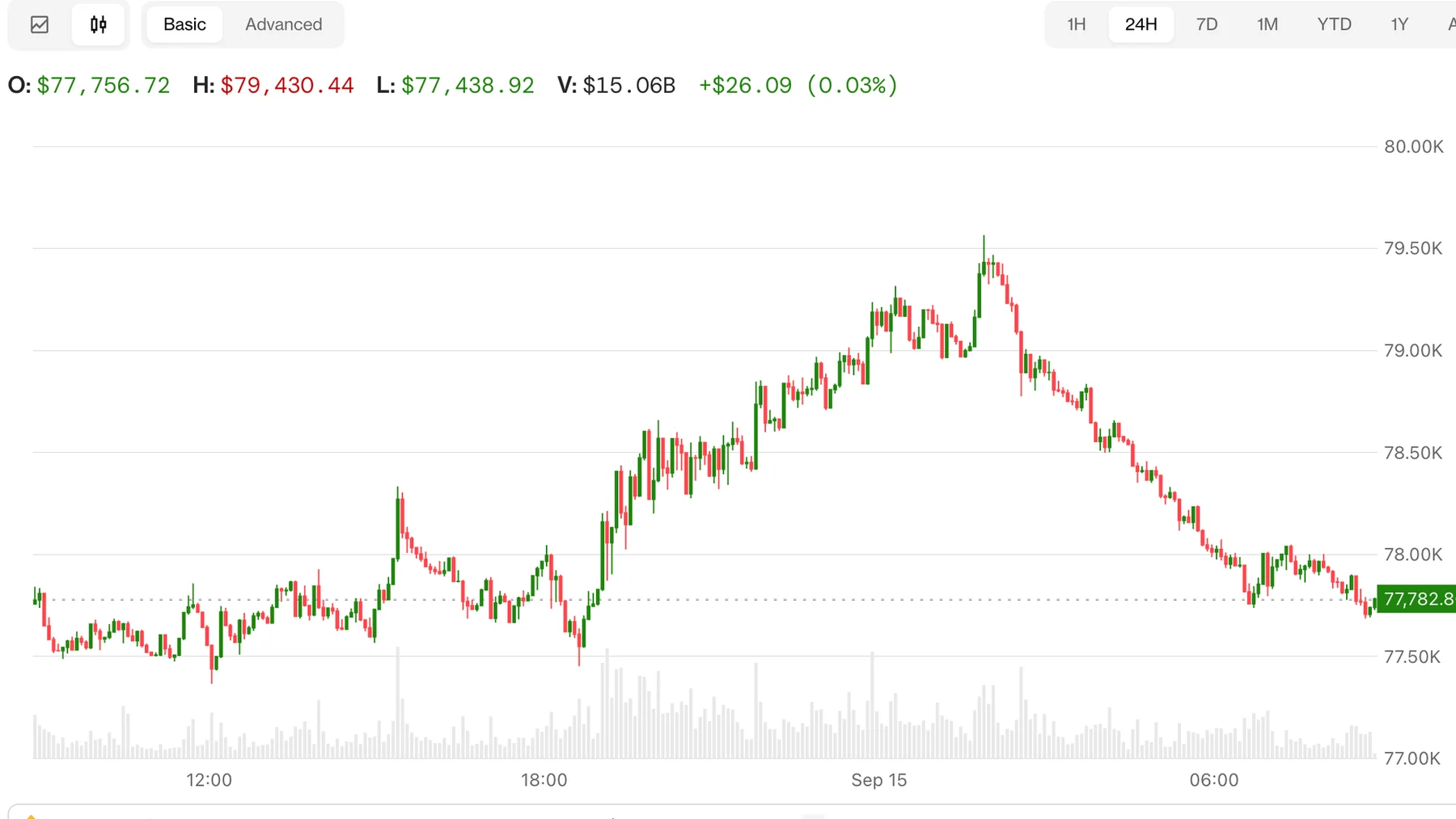
CoinDesk reported that the leading cryptocurrency by market capitalization retreated to trade near $77,800 during the Asian trading session, giving up gains achieved during a previous rally that pushed prices above $79,000. Other major digital assets mirrored this downward trajectory, with ethereum, solana, and XRP experiencing comparable downward corrections from their recent intraday highs. For instance, payments-focused XRP pulled back from its earlier peak, though technical analysts noted it still appeared positioned to potentially form a bullish golden crossover pattern despite the broader market cool-down.
The synchronized retracement across multiple leading tokens demonstrates how sensitive current valuations remain to macro-level political catalysts and legislative news cycles. Market participants who had built aggressive long positions during the preceding upward momentum encountered rapid liquidations and forced adjustments as sentiment shifted. Observers noted that the interplay between political headlines and spot price action underscores the vulnerability of crypto assets to sudden shifts in Washington policymaking dynamics, independent of underlying technology adoption metrics or fundamental network utility growth.
Alternative Regulatory Pathways and Industry Commentary
Amid uncertainty regarding the legislative vote, various industry executives offered perspective on potential alternative outcomes for regulatory oversight. Coinbase Chief Executive Officer Brian Armstrong suggested that a rejection of the Clarity Act might not necessarily represent a negative outcome for the industry as a whole. He pointed out that both the Securities and Exchange Commission and the Commodity Futures Trading Commission have indicated their readiness to publish comprehensive rulemaking independently, which could deliver the desired regulatory clarity through administrative channels rather than congressional legislation.
Commentators emphasized that regulatory certainty remains the ultimate objective for institutional participants seeking long-term integration of digital assets into traditional financial portfolios. Whether such clarity emerges from congressional statute or administrative agency rulemaking, market participants continue to prepare for substantial structural adjustments in compliance protocols. The ongoing debate highlights the complex relationship between the digital asset sector and federal regulators, as industry advocates continuously navigate legislative resistance while striving for recognized legal frameworks that can protect investors and encourage sustainable financial innovation.
Macroeconomic Pressures and Energy Market Dynamics
In addition to legislative headwinds, bitcoin faced downward pressure originating from global energy markets and macroeconomic indicators. West Texas Intermediate crude oil futures rebounded significantly, rising toward $103 per barrel after touching lower levels overnight. Higher energy costs notoriously exacerbate inflationary pressures within the broader economy, complicating the monetary policy calculus facing central bankers. These energy price dynamics coincided with expectations for an imminent interest rate adjustment by the Federal Reserve, which market consensus anticipated would lift the benchmark federal funds target range.
The combination of elevated commodity prices and persistently high benchmark bond yields created a challenging environment for non-yielding risk assets such as bitcoin. Yields on benchmark ten-year United States Treasury notes hovered near elevated thresholds, reinforcing the appeal of fixed-income alternatives over speculative digital currencies. As macroeconomic conditions tightened, leveraged market participants found themselves forced to de-risk, compounding the downward momentum generated by the unfolding political stalemate regarding the digital asset legislation in Washington.
Conclusion and Market Outlook
In conclusion, media reporting from CoinDesk indicated that bitcoin slipped to approximately $77,800 due to legislative uncertainty surrounding the Senate Clarity Act vote and rising crude oil prices, though these market developments and political negotiations remain officially unconfirmed by first-party regulatory bodies. The affected entities include major crypto exchanges and digital asset market participants, while the primary user groups affected are active traders and retail holders navigating heightened volatility. What changes now is that market participants must factor in both legislative hurdles and macroeconomic tightening when assessing short-term risk exposure. The next action for traders is to closely monitor official legislative voting records and central bank announcements while maintaining conservative risk management practices.
The reported events illustrate the complex intersection of regulatory policy and macroeconomic variables influencing digital asset valuations. While the legislative outcome and its direct statutory consequences remain unconfirmed pending official procedural announcements, the psychological impact on market sentiment is evident. Traders and investors are advised to differentiate between verified legislative updates and speculative reporting, ensuring that their portfolio strategies remain resilient against sudden fluctuations driven by political developments and energy market shifts.
Cexvia conclusion
Assessment of Market and Regulatory Developments
CoinDesk reported that bitcoin retreated to approximately $77,800 amid legislative wrangling and energy market inflation concerns, which is not officially confirmed.
- Risk meaning
- Macroeconomic pressures combined with legislative uncertainty can introduce sharp volatility across major crypto assets, impacting traders and holders.
- User action
- Traders should monitor legislative updates and manage leverage cautiously during periods of heightened regulatory and macroeconomic sensitivity.
Continue reading