Independent crypto risk reporting
A Bitcoin Wallet Dormant Since 2013 Moved $31 Million Amid Coldcard Security Crisis
A 12-year-old Bitcoin wallet transferred $31 million in BTC amid a broader trend of dormant coins moving, linked to the Coldcard hack. The transaction, flagged by Whale Alert, involved 500 BTC from wallet 18TExP, which had been inactive since 2013. While the movement is not officially confirmed, analysts suggest it reflects heightened security concerns following the Coldcard incident. The event highlights risks for users of hardware wallets and long-term cryptocurrency holders. This report is based on media reporting and has not been confirmed by an official source.
Dormant Bitcoin Wallet Movement Amid Security Crisis
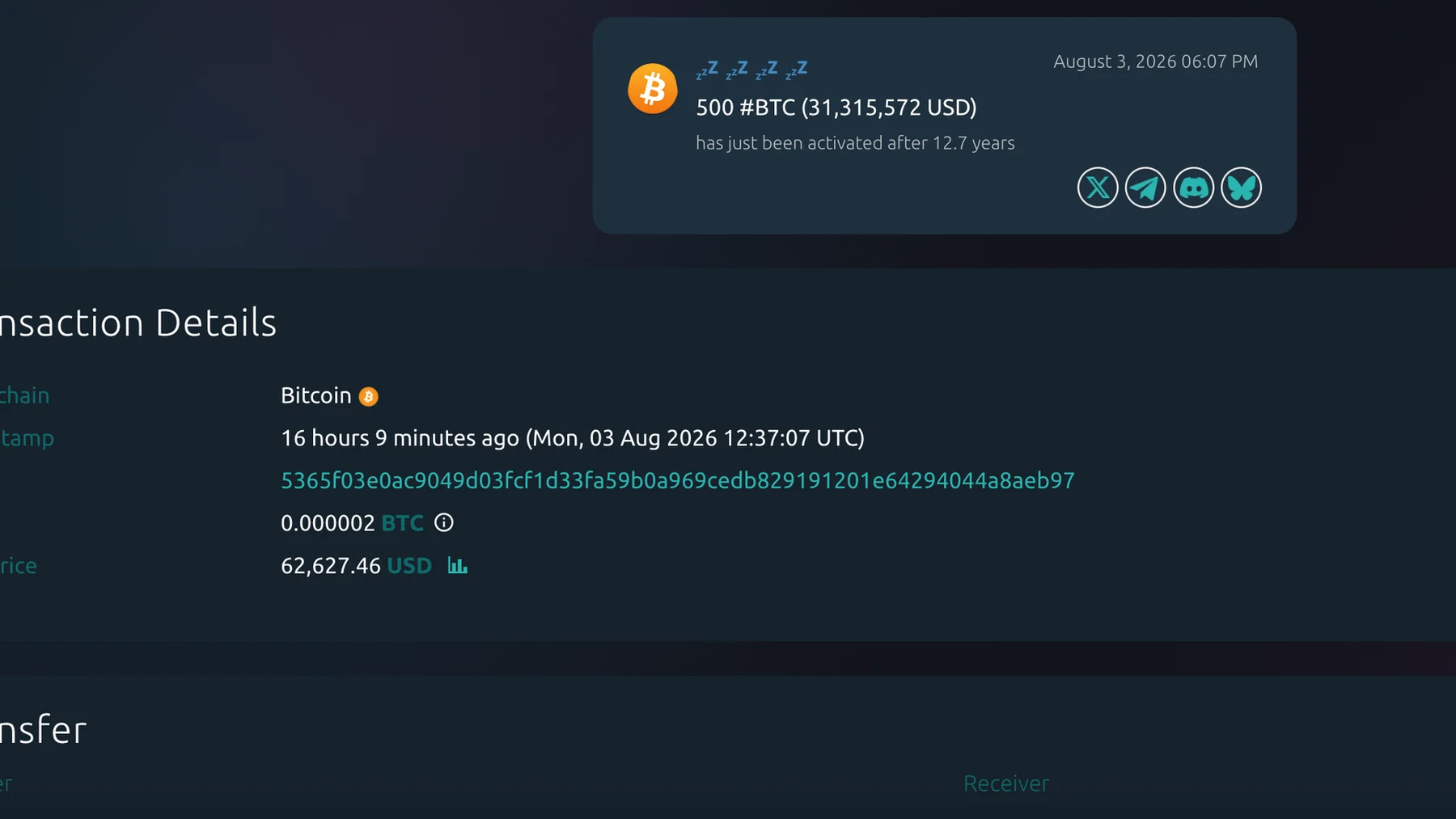
A Bitcoin wallet inactive since 2013, labeled 18TExP, transferred 500 BTC (approximately $31.3 million) on August 4, 2026, according to on-chain tracker Whale Alert. This marked the first activity of the wallet in 12.7 years, raising questions about the motivations behind the transaction. The movement occurred amid a broader wave of dormant coin activity, with multiple wallets showing signs of reactivation following the Coldcard hack. While the wallet's owner has not publicly explained the transfer, analysts speculate that security concerns may have prompted the action. The timing aligns with the ongoing security crisis involving Coldcard hardware wallets, which have been exploited to drain over $130 million in BTC since July 30, 2026.
The reactivation of the 18TExP wallet highlights the risks associated with long-term cryptocurrency storage. Users who have not accessed their wallets for years may face challenges in verifying the security of their holdings, especially during periods of heightened vulnerability. The Coldcard hack, which exploited a flaw dating back to March 2021, has intensified scrutiny of hardware wallet protocols. This incident underscores the importance of regular security audits and the need for users to stay informed about potential threats. While the 18TExP transaction is not officially confirmed, its timing and scale suggest a possible connection to the broader security concerns affecting the Bitcoin ecosystem.
Coldcard Hack and Its Impact on Dormant Coin Activity
The Coldcard hack, which began on July 30, 2026, has triggered a significant increase in the movement of dormant Bitcoin. According to research by Galaxy, attackers have drained over $130 million in BTC from Coldcard-generated wallets, exploiting a vulnerability that dates back to March 2021. This incident has led to a surge in user anxiety, with many holders of long-term Bitcoin reassessing their storage strategies. On-chain data from CryptoQuant reveals a notable spike in the movement of coins dormant for seven to 10 years, with 935 BTC moving on August 3 alone. This trend suggests that users are proactively migrating funds to mitigate risks associated with the Coldcard breach.
The correlation between the Coldcard hack and the reactivation of dormant wallets indicates a broader shift in user behavior. Analysts note that while old-coin movements can occur for various reasons—such as estate transfers or custodial migrations—the clustering of large-scale transactions following the Coldcard incident points to security-driven actions. The 18TExP wallet's transfer aligns with this pattern, as it occurred during the same period of heightened vulnerability. However, without direct confirmation from the wallet's owner, the exact motivations remain speculative. The incident underscores the need for transparency in addressing security flaws and the importance of user education in mitigating risks.
Analysis of On-Chain Data and Market Reactions
On-chain analytics platforms like CryptoQuant provide critical insights into the movement of dormant coins. The data shows that coins dormant for five to seven years experienced a significant spike, with 6,388 BTC moving on July 31, 2026. This aligns with the timeline of the Coldcard hack, suggesting a direct correlation between the security incident and user behavior. The increased activity on exchanges, as noted by some analysts, reflects a loss of confidence in self-custody solutions. While the 18TExP transaction is not an isolated case, its scale and timing make it a focal point for discussions on security practices in the Bitcoin ecosystem.
The market's reaction to the Coldcard hack has been mixed, with some investors viewing the increased movement of dormant coins as a sign of proactive risk management. However, others remain cautious, citing the lack of official confirmation regarding the 18TExP transfer. The incident has also sparked debates about the reliability of hardware wallets and the need for more robust security measures. As the investigation into the Coldcard breach continues, users are advised to remain vigilant and seek guidance from trusted sources to protect their assets.
Expert Perspectives on Security Concerns and User Behavior
Blockchain analyst Lookonchain highlighted the significance of the 18TExP wallet's reactivation, stating that the transfer could indicate a security-driven migration. The analyst noted that the wallet's owner moved all 500 BTC to a new address within an hour of the Coldcard hack's escalation, suggesting a direct response to the vulnerability. While such actions are not uncommon, the scale and timing of the transfer raise questions about the broader implications for Bitcoin users. Experts emphasize that the incident underscores the need for continuous monitoring of wallet security and the importance of adapting to emerging threats.
The reactivation of dormant wallets also reflects a growing awareness among users about the risks associated with long-term storage. Many holders are now prioritizing security over convenience, opting for solutions that offer greater transparency and control. This shift in behavior is likely to influence future trends in cryptocurrency adoption, as users become more discerning about the platforms they trust with their assets. However, without clear guidance from official sources, the effectiveness of these measures remains uncertain.
Broader Implications for the Bitcoin Ecosystem
The Coldcard hack and the subsequent movement of dormant coins highlight systemic vulnerabilities in the Bitcoin ecosystem. While hardware wallets are designed to provide enhanced security, the incident demonstrates that no solution is entirely immune to exploitation. The reactivation of long-dormant wallets also raises questions about the long-term viability of self-custody models, particularly in the face of evolving threats. As the industry continues to grapple with these challenges, the need for standardized security protocols and user education becomes increasingly urgent.
The incident has also sparked discussions about the role of third-party auditors in verifying the security of hardware wallets. Some experts argue that independent assessments could help identify vulnerabilities before they are exploited, thereby reducing the risk of large-scale breaches. However, the lack of a centralized authority in the Bitcoin ecosystem complicates efforts to enforce such measures. As a result, users must remain proactive in safeguarding their assets and staying informed about potential risks.
Conclusion: Unconfirmed Link, Proactive Measures Recommended
The movement of 500 BTC from the 18TExP wallet remains unconfirmed, but its timing and scale suggest a potential connection to the Coldcard hack. While the transaction itself does not provide definitive evidence of a security breach, it aligns with broader trends of dormant coin activity observed during the incident. The lack of official verification underscores the importance of caution when interpreting such events. Users are advised to remain vigilant, monitor on-chain activity, and seek updates from trusted sources to mitigate risks associated with hardware wallet vulnerabilities.
The Coldcard hack has exposed the fragility of even seemingly secure storage solutions, prompting a reevaluation of security practices across the Bitcoin ecosystem. As the investigation continues, the focus will shift to identifying the root cause of the vulnerability and implementing measures to prevent future incidents. In the interim, users must prioritize security, diversify their storage methods, and stay informed about emerging threats. The incident serves as a reminder that while Bitcoin offers robust security features, the responsibility for protecting assets ultimately lies with the individual.
Cexvia conclusion
Coldcard Hack Sparks Dormant Bitcoin Movement: Unconfirmed Link, Proactive Security Measures Advised
The movement of 500 BTC from wallet 18TExP is reported but not officially confirmed. The transaction coincides with the Coldcard hack, suggesting a potential link to security concerns. Affected entities include Coldcard users and long-term Bitcoin holders. Changes now include heightened scrutiny of hardware wallet security. Next actions involve monitoring on-chain activity and verifying updates from official sources.
- Risk meaning
- The incident underscores vulnerabilities in long-term cryptocurrency storage and the ripple effects of hardware wallet breaches. Users of dormant wallets face risks of sudden fund movements due to security threats, while market confidence in self-custody solutions may decline. The event highlights the need for proactive security measures and transparency in addressing vulnerabilities.
- User action
- Users should review hardware wallet security protocols, consider migrating funds to verified platforms, and monitor on-chain activity for unusual transactions. Holders of long-dormant wallets should assess their storage methods and stay informed about security updates from service providers.
Continue reading