Regulatory Risk
Clarity Act Sits Idle Over Trump Ethics Question as Warren Asks SEC to Investigate Him
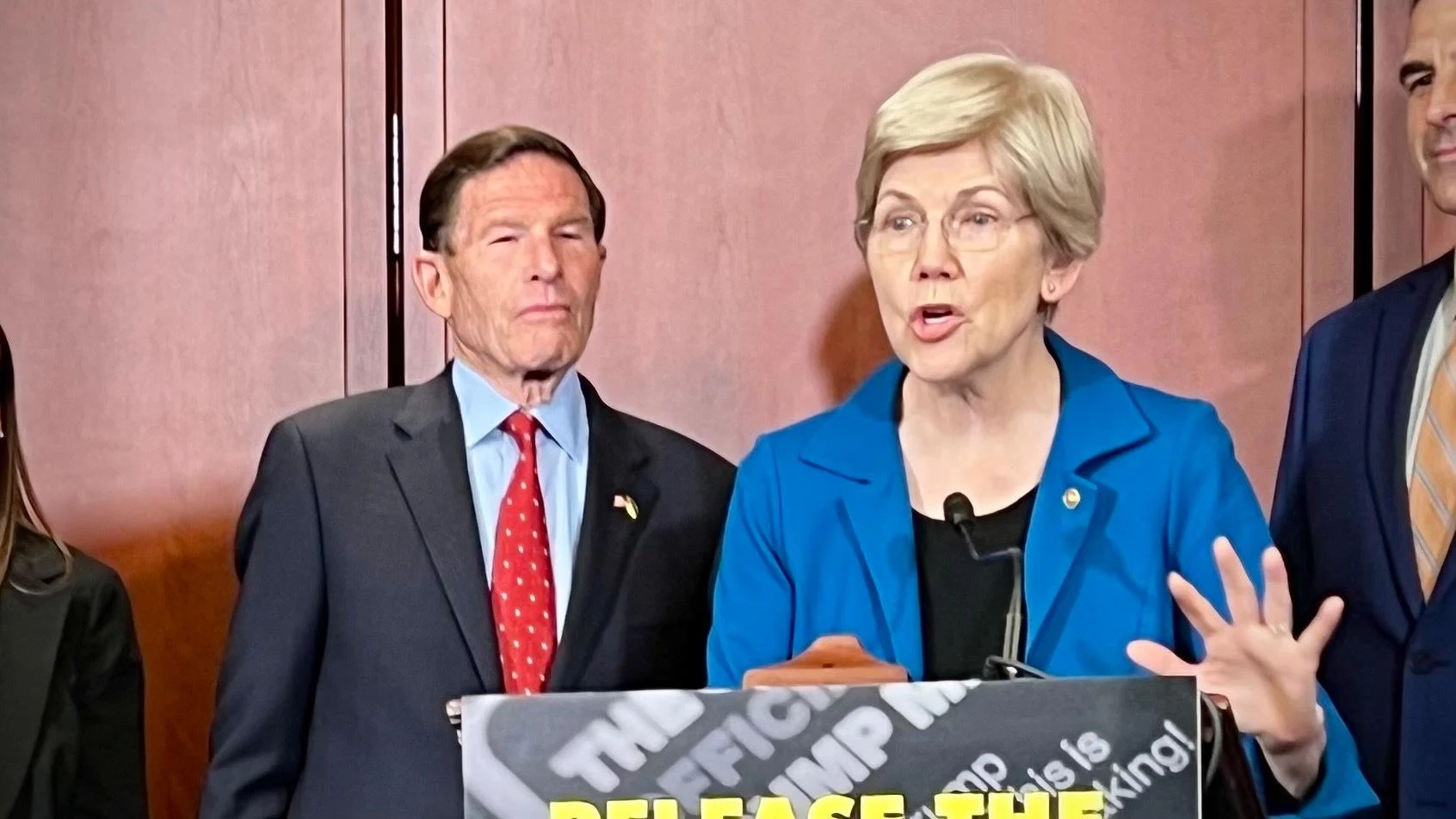
According to CoinDesk reporting, U.S. Senators Elizabeth Warren and Richard Blumenthal requested that the Securities and Exchange Commission probe the $TRUMP memecoin, an initiative that remains not officially confirmed by regulatory authorities.
Legislative Gridlock Over Digital Asset Rules
CoinDesk reported that the Digital Asset Market Clarity Act has encountered severe legislative headwinds in the United States Senate. Negotiators attempting to finalize the comprehensive cryptocurrency market structure bill are currently awaiting a formal response from the White House regarding a heavily contested ethics section. This specific provision aims to implement strict prohibitions preventing senior government officials from maintaining direct operational or financial involvement in external cryptocurrency projects. The legislative stalemate underscores the deep political divisions surrounding digital asset oversight, especially when high-ranking executive branch members are perceived to have personal financial ties to emerging cryptographic tokens.
According to the published findings, the ongoing standoff threatens to derail Senate Majority Leader John Thune's strategic timeline to advance the voting process. Without reaching a delicate compromise capable of securing the necessary backing from at least ten Democratic senators, the overarching regulatory framework faces a high probability of legislative failure. Observers note that the dispute goes beyond technical definitions of financial instruments, touching directly upon executive accountability and the ethical boundaries expected of modern political leadership in the rapidly evolving decentralized finance ecosystem.
Lawmakers Petition SEC Regarding Token Losses
CoinDesk reported that U.S. Senators Elizabeth Warren and Richard Blumenthal formally requested that Securities and Exchange Commission Chairman Paul Atkins launch an investigative proceeding into the $TRUMP memecoin. The parliamentary letter highlighted that nearly one million individual investors experienced cumulative financial losses estimated at approximately $3.8 billion following the digital asset's volatile price trajectory. The lawmakers emphasized that the president's own financial disclosures indicated substantial personal earnings derived from the token, creating an acute asymmetry that warrants rigorous regulatory scrutiny.
The correspondence argued that despite the SEC previously asserting that memecoins fall outside its traditional oversight perimeter due to limited structural functionality, the agency retains a fundamental obligation to investigate potential fraudulent enrichment schemes. By drawing attention to the stark contrast between public investor devastation and executive financial gain, the Democratic senators sought to pressure financial watchdogs into addressing perceived vulnerabilities in market integrity and investor protection safeguards within the digital asset marketplace.
Market Valuation Dynamics and Price Collapse
CoinDesk detailed the dramatic valuation swings experienced by the $TRUMP token since its inception, noting that the asset achieved a peak market price exceeding forty-six dollars before experiencing a prolonged and severe downward correction. The token subsequently depreciated significantly, stabilizing at substantially lower valuations as speculative enthusiasm faded. Temporary price spikes were observed intermittently, often coinciding with public announcements regarding exclusive promotional events, including high-profile dinners hosted at Mar-a-Lago featuring the president as a keynote speaker.
Despite these occasional promotional rallies, market observers documented that the upward price momentum proved entirely unsustainable over the medium term. The cyclical nature of these temporary recoveries highlighted the speculative foundation upon which the token's valuation was constructed. Such extreme price volatility has consistently fueled broader concerns among consumer advocates and financial analysts regarding the systemic risks posed by celebrity and politically affiliated digital assets operating without standard investor protection disclosures.
Regulatory Jurisdiction and Policy Scope
CoinDesk noted that the Securities and Exchange Commission previously maintained a formal stance that memecoins generally escape its primary regulatory domain. Following leadership transitions within the administration, SEC staff issued statements indicating that digital tokens lacking functional utility or intrinsic economic purpose fail to satisfy the legal criteria required to be classified as traditional securities. This administrative interpretation effectively created a regulatory vacuum, leaving many speculative tokens outside the traditional disclosure and enforcement mechanisms enforced by federal authorities.
The ongoing debate over the Clarity Act directly challenges this jurisdictional boundary by attempting to establish clearer legislative definitions and ethical guardrails. Lawmakers pushing for increased oversight argue that leaving high-profile tokens unregulated creates dangerous loopholes that undermine public trust in financial markets. Conversely, industry participants and administration defenders contend that expanding agency mandates into non-security meme assets could introduce excessive compliance burdens and stifle innovation across the broader blockchain development sector.
Political Dynamics and Committee Leadership
CoinDesk reported that Senator Elizabeth Warren serves as the ranking minority member of the powerful Senate Banking Committee, positioning her at the center of financial legislative oversight despite not being a direct negotiator for the Clarity Act compromise. Congressional analysts suggest that anticipated shifts in political momentum during the upcoming midterm elections could potentially restore the Democratic majority in the Senate. Under such a scenario, Senator Warren would likely assume direct leadership of the banking committee, granting her substantial authority over financial regulatory agencies and pending cryptocurrency legislation.
The strategic maneuvering surrounding the current legislative package reflects broader electoral calculations as both major political parties seek to position themselves advantageously on economic and technological issues. The insistence by Democratic lawmakers on stringent ethical constraints highlights an ongoing effort to establish legislative precedents that restrict elected officials from profiting through digital asset issuance. These political tensions ensure that cryptocurrency governance will remain a contentious battleground throughout the current legislative session and into the upcoming election cycle.
Conclusion and Verification Status
In conclusion, CoinDesk reported that the Digital Asset Market Clarity Act remains stalled in the Senate due to unresolved disputes over ethics provisions restricting government officials from engaging in cryptocurrency projects, while Senators Elizabeth Warren and Richard Blumenthal petitioned the SEC to investigate the $TRUMP memecoin. The affected entities include President Donald Trump, the U.S. Securities and Exchange Commission, and nearly one million $TRUMP investors who experienced significant financial losses. Crucially, these allegations of enrichment schemes and the formal investigative requests are not officially confirmed by regulatory authorities or the White House. The changes occurring now involve intense closed-door negotiations over revised legislative ethics text and heightened political pressure on financial watchdogs.
Moving forward, market participants and digital asset traders must take immediate action by closely monitoring Senate voting schedules and maintaining prudent risk management protocols regarding politically sensitive tokens. Because the reports of potential fraud and the SEC investigative petitions have not been officially confirmed, stakeholders should avoid speculative positioning based solely on preliminary media accounts. Exchanges and institutional participants are advised to re-evaluate their compliance frameworks in anticipation of stricter legislative definitions concerning public official involvement in decentralized financial networks.
Cexvia conclusion
Strategic Outlook and Reporting Verification
CoinDesk reported that Democratic lawmakers petitioned the SEC to investigate potential enrichment schemes tied to the $TRUMP token, while the broader Clarity Act stalled over ethics rules; these claims remain not officially confirmed.
- Risk meaning
- Regulatory uncertainty around legislative market structure bills could intensify compliance volatility for digital asset trading platforms.
- User action
- Traders and market participants should monitor legislative developments and maintain conservative risk profiles regarding politically sensitive tokens.
Continue reading