Regulatory Risk
CLARITY Act Stalls in Senate as White House Silence on Bipartisan Ethics Proposal Pressures 2026 Passage Odds
According to reporting by crypto.news citing journalist Eleanor Terrett, the CLARITY Act remains stuck in the Senate after the White House allegedly failed to respond to a bipartisan ethics proposal, pushing its 2026 passage odds down to 27%. These developments are not officially confirmed by the White House.
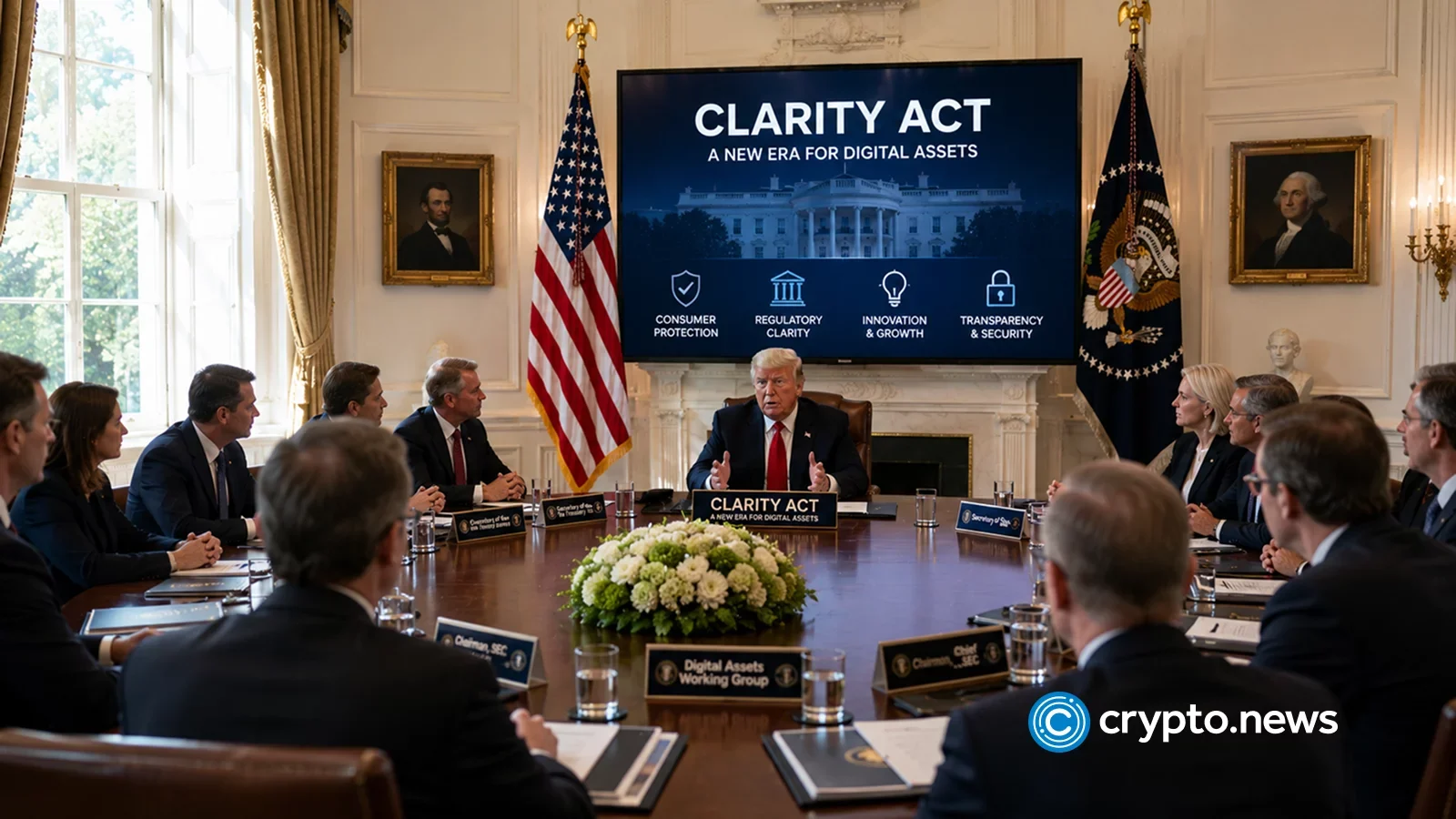
Legislative Gridlock and Ethics Dispute
According to crypto.news, the legislative process for the CLARITY Act has encountered significant friction in the United States Senate. Reporting indicates that the primary roadblock centers on a dispute regarding ethics enforcement provisions designed to govern digital asset activities involving federal officials. Bipartisan lawmakers attempted to bridge the gap through a targeted counterproposal, yet the executive branch has reportedly failed to issue a formal response. This administrative silence has effectively frozen negotiations, preventing the necessary political alignment required to secure the broad bipartisan support essential for overcoming legislative hurdles in the upper chamber of Congress.
The reported ethics counterproposal, put forward by Senator Thom Tillis and Senator Ruben Gallego, attempts to resolve deep-seated Democratic objections by empowering state attorneys general to enforce restrictions. Under this framework, state-level authorities would gain the legal standing to sue the Department of Justice if federal officials failed to adequately enforce established ethics mandates. Initial legislative versions faced staunch opposition because enforcement was exclusively delegated to the Department of Justice, a structure that critics argued lacked sufficient independent oversight. Although these discussions aim to build consensus, the reported lack of engagement from the White House leaves the compromise text in administrative limbo.
Senate Schedule Pressures and Procedural Hurdles
The legislative timeline for the proposed digital asset framework faces severe compression as the Senate approaches its scheduled congressional recess. Senate Majority Leader John Thune has not filed a cloture motion for the bill, opting instead to prioritize alternative legislative vehicles such as continuing resolutions on the chamber floor. Without an active cloture motion, lawmakers lack the necessary procedural momentum to initiate debate and overcome potential filibusters before the legislative window closes. This scheduling reality leaves very little operational room for error, as any further administrative delays threaten to push consideration deep into the autumn calendar.
Even if leadership decides to file cloture following the reported ethics discussions, the procedural hurdles remain formidable under standard Senate operating rules. Advancing the legislation requires securing sixty votes to break potential procedural blocks, meaning that a robust coalition of cross-party votes must be locked in advance. In addition to the unresolved ethics dispute, lawmakers continue to debate complex provisions concerning non-custodial blockchain developers and Bank Secrecy Act obligations. While Treasury officials have argued that these provisions merely codify existing policies, law enforcement concerns continue to complicate the path toward a unified floor vote.
Market Sentiment and Prediction Odds Adjustment
Financial markets have quickly reacted to the reported legislative stall, with prediction platform participants significantly downgrading their expectations for the bill. According to data highlighted in the reporting, Polymarket traders have adjusted the probability of the CLARITY Act becoming law before the end of the year down to twenty-seven percent. This sharp decline contrasts starkly with earlier periods in the year when market participants assigned high expectations to the framework following initial committee momentum. The descending odds reflect a realistic reassessment of the narrowing congressional calendar and the persistent political disagreements plaguing the legislative text.
The adjustment in prediction markets underscores broader institutional anxiety regarding the United States regulatory trajectory for digital assets. Market participants had anticipated that a comprehensive market structure bill would establish regulatory certainty between the Securities and Exchange Commission and the Commodity Futures Trading Commission. The failure to achieve timely passage leaves the industry exposed to ongoing regulatory fragmentation and enforcement-driven oversight. As the legislative odds recede, market stakeholders must evaluate the financial and operational implications of operating without overarching statutory guidance from Congress.
Analyst Warnings on Potential Market Volatility
Financial institutions have issued cautionary notes regarding the potential market repercussions should the Senate fail to advance the market structure legislation. Bernstein analysts warned clients that a formal collapse or prolonged delay of the bill could trigger an immediate knee-jerk sell-off across Bitcoin and the broader cryptocurrency market. Such an adverse reaction could push digital asset valuations through another substantial leg downward as speculative positions unwind in response to renewed regulatory uncertainty. Tactical analysts suggest that while late-quarter momentum might eventually stabilize sentiment, the immediate aftermath of a legislative failure could introduce acute downside pressure.
In the event of a congressional stalemate, analysts anticipate that regulatory bodies will face increased pressure to utilize alternative administrative mechanisms to address industry concerns. This could involve stepped-up guidance initiatives from financial regulators through coordinated programs covering token classifications and decentralized finance exemptions. While administrative guidance can offer temporary operational relief for domestic crypto enterprises, financial analysts emphasize that such measures lack the durability and legal permanence of a statute enacted by Congress. Consequently, the absence of federal legislation leaves the digital asset sector vulnerable to shifting administrative priorities.
Scope of Disputed Provisions and Agency Oversight
The policy debate surrounding the legislative package extends beyond ethics rules, touching upon fundamental aspects of federal agency jurisdiction. Disagreements persist regarding how the Securities and Exchange Commission and the Commodity Futures Trading Commission will divide regulatory oversight over spot and derivative digital asset markets. Industry advocates have consistently argued for clear statutory demarcations to eliminate overlapping enforcement jurisdictions that historically created compliance ambiguities for market participants. The lack of resolution on these structural questions keeps digital asset platforms exposed to discretionary enforcement actions by federal regulators.
Furthermore, Treasury officials have actively engaged in defending specific statutory interpretations within the draft legislation against criticism from law enforcement organizations. Treasury Secretary Scott Bessent defended provisions protecting non-custodial blockchain developers, asserting that these developers have never been subject to traditional Bank Secrecy Act registration requirements. Bessent maintained that the proposed bill merely codifies existing Treasury policies rather than carving out new exemptions for technology developers. Despite these clarifications, the ongoing debate among lawmakers, executive agencies, and law enforcement groups continues to complicate the legislative pathway.
Conclusion and Strategic Outlook for Market Participants
In conclusion, the reported failure of the White House to respond to bipartisan ethics proposals has left the CLARITY Act stalled in the Senate, pushing 2026 passage odds down to twenty-seven percent according to prediction market metrics. These developments affect crypto exchanges, institutional investors, and digital asset developers seeking regulatory clarity in the United States. What changes now is that market participants must operate under heightened legislative uncertainty, preparing for potential short-term price volatility and an increased reliance on administrative guidance rather than permanent statutory reform. These core facts are based on media reporting and remain unconfirmed by official or first-party sources.
The next action for affected entities involves closely monitoring Senate procedural developments, reviewing compliance strategies against potential regulatory fragmentation, and maintaining robust risk management frameworks. Stakeholders must track whether Senate leadership files a cloture motion following any potential breakthrough on the ethics dispute, or if the legislative timeline slips past the upcoming congressional recess. Cexvia will continue to monitor these developments as further verified information becomes available from legislative and executive offices, keeping market participants informed of evolving risk profiles.
Cexvia conclusion
Conclusion and Unconfirmed Factors
The reported legislative stall impacts crypto market participants and institutional investors monitoring digital asset market structure reform in the United States. While the legislative path narrows, the underlying policy disputes over ethics enforcement and decentralized finance remain unresolved. These assertions are not officially confirmed by federal authorities.
- Risk meaning
- For market participants, the prolonged legislative uncertainty increases the likelihood of volatility across digital asset valuations, particularly if upcoming congressional schedules force prolonged delays. Without permanent statutory clarity, exchanges and market makers must continue navigating fragmented regulatory approaches from federal agencies.
- User action
- Affected crypto exchanges and institutional market participants should monitor Senate procedural filings, maintain contingency plans for potential short-term asset price corrections, and review exposure to regulatory compliance strategies tied to ongoing federal oversight developments.
Continue reading