Regulatory Risk
The Clarity Act, Trump’s Memecoin, and the SEC Investigation Warren Requested
According to reporting by crypto.news on August 4, 2026, the Digital Asset Market Clarity Act has stalled in the United States Senate due to disagreements over an ethics provision targeting senior government officials' involvement in crypto projects. Senators Elizabeth Warren and Richard Blumenthal sent a letter to SEC Chairman Paul Atkins requesting an investigation into the $TRUMP memecoin, citing $3.8 billion in estimated investor losses and $636 million in presidential profits. These claims are not officially confirmed by regulatory authorities.
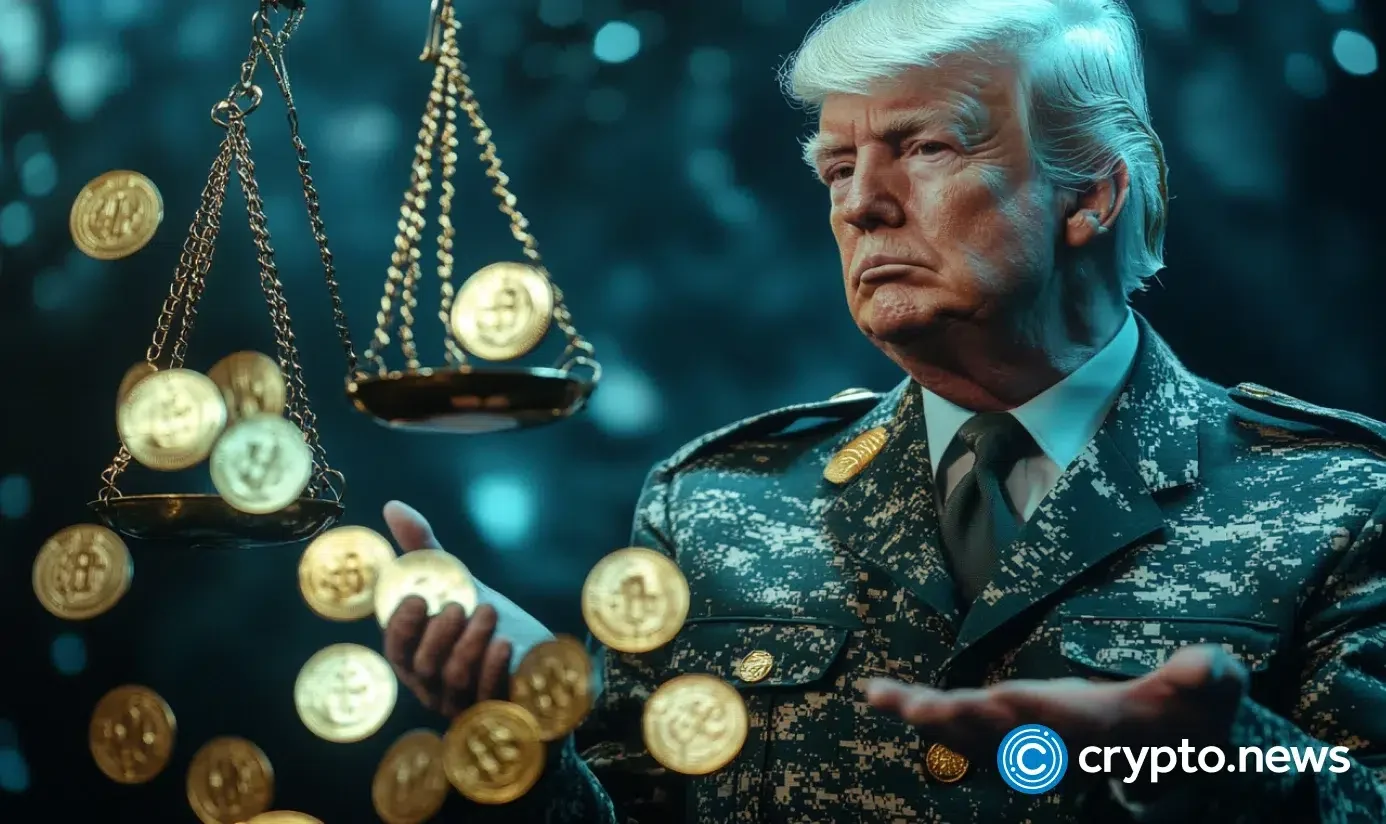
Legislative Paralysis and the Clarity Act Stalemate
Reporting by crypto.news on August 4, 2026, details how the crypto industry's primary legislative vehicle for market structure reform, the Digital Asset Market Clarity Act, has encountered a major legislative roadblock in the United States Senate. The proposed bill aims to establish a comprehensive statutory framework that distinguishes digital securities from digital commodities, providing much-needed regulatory certainty for exchanges, token issuers, and retail market participants. Despite securing bipartisan support through committee evaluations and widespread backing from industry lobbying groups, the legislation cannot advance to a full floor vote due to sharp partisan disagreements over a specific ethics provision.
The core legislative dispute centers on whether Congress should enact restrictions prohibiting senior government officials, including the sitting president, from directly profiting from digital asset projects while holding public office. While democratic lawmakers argue that such guardrails are essential to prevent blatant conflicts of interest, Republican counterparts and administration defenders have frequently characterized these proposals as unwarranted scope creep or partisan maneuvering. As negotiations continue behind closed doors among appointed bipartisan workgroups, the broader crypto ecosystem continues to operate within an unpredictable regulatory environment characterized by ongoing jurisdictional disputes among federal agencies.
Senatorial Scrutiny and the Request for Regulatory Investigation
In connection with the ongoing legislative standoff, Senators Elizabeth Warren and Richard Blumenthal dispatched a formal correspondence to Securities and Exchange Commission Chairman Paul Atkins on August 4, 2026. The communication formally requested that the federal regulator initiate an inquiry into the $TRUMP token, highlighting significant financial metrics cited in media investigations and public financial disclosures. Specifically, the legislative letter referenced estimates indicating that retail buyers incurred approximately $3.8 billion in losses, whereas entities associated with the president reportedly accumulated roughly $636 million in revenue through initial allocations and protocol transaction fees.
Industry analysts and legal observers widely note that the request to the Securities and Exchange Commission faces substantial structural and legal hurdles. Under current commission policies and published staff guidance from early 2025, memecoins have been formally categorized as generally falling outside the agency's statutory jurisdiction because they typically lack traditional investment contract characteristics under the Howey test. Consequently, independent observers suggest that the senatorial inquiry functions primarily as a political positioning mechanism within the ongoing Clarity Act negotiations rather than a traditional, enforceable regulatory referral.
Market Dynamics, Valuation Metrics, and Retail Losses
The market trajectory of the $TRUMP token since its inception in January 2025 provides the empirical backdrop for the intense political friction surrounding the asset class. Launched days prior to the presidential inauguration, the token experienced rapid speculative demand, reaching an all-time price peak of approximately $46 per token. However, subsequent trading activity demonstrated severe depreciation, with the asset sliding significantly over subsequent months to trade near $1.47, representing a drawdown of roughly 97 percent from its initial peak values and leaving nearly one million individual holders with substantial unrealized deficits.
Blockchain analytics cited in the crypto.news reporting illustrate a stark financial asymmetry between the token's issuing entities and retail purchasers. While protocol transaction fees and initial sales generated substantial inflows for entities linked to the president—bolstered by exclusive social events such as galas for top holders—the broader user base absorbed the vast majority of financial erosion. Financial commentators note that while extreme price volatility and high retail loss ratios are common across the broader memecoin sector, the unprecedented involvement of a sitting head of state introduces unique governance complications that distinguish this asset from standard speculative tokens.
Regulatory Gaps and Jurisdictional Ambiguities
The controversy surrounding the digital asset has exposed significant structural gaps within the United States federal regulatory apparatus. Because the Securities and Exchange Commission has previously clarified that most memecoins fall outside its enforcement perimeter, and because the Commodity Futures Trading Commission has not asserted definitive oversight over such tokens, a substantial regulatory vacuum has emerged. Consumer protection agencies have similarly refrained from broad intervention, leaving retail participants with limited federal pathways to investigate or seek legal remedies for severe financial losses incurred within these digital asset markets.
This regulatory vacuum creates a profound policy paradox for federal lawmakers attempting to stabilize the digital asset economy. Without comprehensive statutory reform like the Clarity Act, federal agencies will remain constrained in their ability to police speculative token issuances or enforce standardized disclosure requirements. Conversely, attempting to attach stringent ethics provisions to legislative packages risks alienating key political stakeholders, ensuring that the structural vulnerabilities highlighted by the token's market history remain unaddressed by federal statute.
Bipartisan Negotiations and Compromise Efforts
In an effort to break the legislative deadlock, a bipartisan negotiating team consisting of Senators Thom Tillis and Ruben Gallego has undertaken the task of drafting compromise language for the Clarity Act's disputed ethics section. Their proposed legislative adjustments reportedly explore frameworks that would restrict senior government officials from launching new digital asset projects while potentially grandfathering existing holdings. This middle-ground approach is designed to satisfy Democratic demands for future accountability without necessitating the immediate divestment of pre-existing presidential crypto positions.
Despite these ongoing legislative maneuvers, the White House has not yet issued a definitive public commitment regarding whether the administration would ultimately sign a bill containing meaningful restrictions on government crypto involvement. Industry participants remain intensely focused on the upcoming congressional calendar, noting that lawmakers face a very narrow window following the legislative recess before the distraction of midterm election campaigning curtails productive floor action. Failure to achieve consensus during this legislative session could force the entire regulatory reform process to restart in a newly constituted Congress.
Concrete Findings and Immediate User Guidance
Cexvia risk intelligence confirms that the Digital Asset Market Clarity Act is currently stalled in the United States Senate due to unresolved partisan disputes over ethics provisions targeting senior government officials' cryptocurrency activities. This legislative gridlock is directly precipitated by the market performance and controversy surrounding the $TRUMP memecoin, which media reports indicate generated approximately $636 million in revenue for presidential entities while retail buyers experienced an estimated $3.8 billion in losses. All substantive factual claims regarding financial figures and investigation requests originate from media reporting by crypto.news and remain not officially confirmed by regulatory authorities.
Affected market participants, retail traders, and institutional entities must acknowledge that the regulatory environment for digital assets remains fraught with ambiguity and political friction. Users should exercise extreme caution when interacting with unverified memecoins or speculative tokens operating outside formalized disclosure frameworks. Moving forward, stakeholders should closely monitor the legislative compromises being developed by Senators Thom Tillis and Ruben Gallego, track any formal or informal responses from the Securities and Exchange Commission regarding senatorial inquiries, and prepare for prolonged regulatory uncertainty throughout the current congressional session.
Cexvia conclusion
Comprehensive Assessment and Next Steps
The Clarity Act remains blocked in Congress over ethics provisions concerning the $TRUMP memecoin, with Senators Warren and Blumenthal requesting an SEC probe into reported financial asymmetries. These assertions are not officially confirmed.
- Risk meaning
- The legislative deadlock illustrates how political conflicts of interest directly impede foundational crypto market structure reforms, leaving market participants exposed to ongoing regulatory ambiguity and enforcement uncertainty.
- User action
- Market participants and investors should monitor the ongoing bipartisan legislative negotiations between Senators Thom Tillis and Ruben Gallego while exercising heightened caution regarding unregulated memecoins operating in regulatory grey areas.
Continue reading