Market Risk Intelligence
Coldcard Wallet Exploit Triggers Unprecedented Inflows Back to Centralized Exchanges as Investors Re-evaluate Self-Custody
According to reporting by CoinDesk, a major security vulnerability affecting Coldcard hardware wallets has prompted smaller bitcoin holders to move funds back onto centralized exchanges for safety. This behavioral shift contrasts sharply with the massive self-custody withdrawals seen following the FTX collapse in late 2022. These claims remain not officially confirmed by all impacted device manufacturers.
Overview of the Reported Coldcard Hardware Wallet Vulnerability
Publisher CoinDesk detailed that a security incident impacted hardware wallets manufactured by Canadian firm Coinkite, specifically involving flaws in seed phrase generation. The vulnerability allegedly dates back several years and relies on compromised random number generation logic during the creation of new wallets, allowing malicious actors to reconstruct private keys offline without physical device access. According to the published reports, the security breaches began in late July, triggering widespread concern across the global bitcoin community regarding the operational integrity of specialized hardware devices.
As blockchain researchers and security analysts continued to investigate the scope of the incident, estimated losses mounted significantly across thousands of distinct wallet addresses. The sudden emergence of these multi-million-dollar thefts challenged the long-standing assumption that offline hardware storage is entirely infallible against targeted software exploits. Industry observers noted that the incident differs fundamentally from systemic exchange failures, focusing attention directly on supply chain and firmware verification standards within specialized manufacturing environments.
On-Chain Analytics and Retail Investor Behavioral Shifts
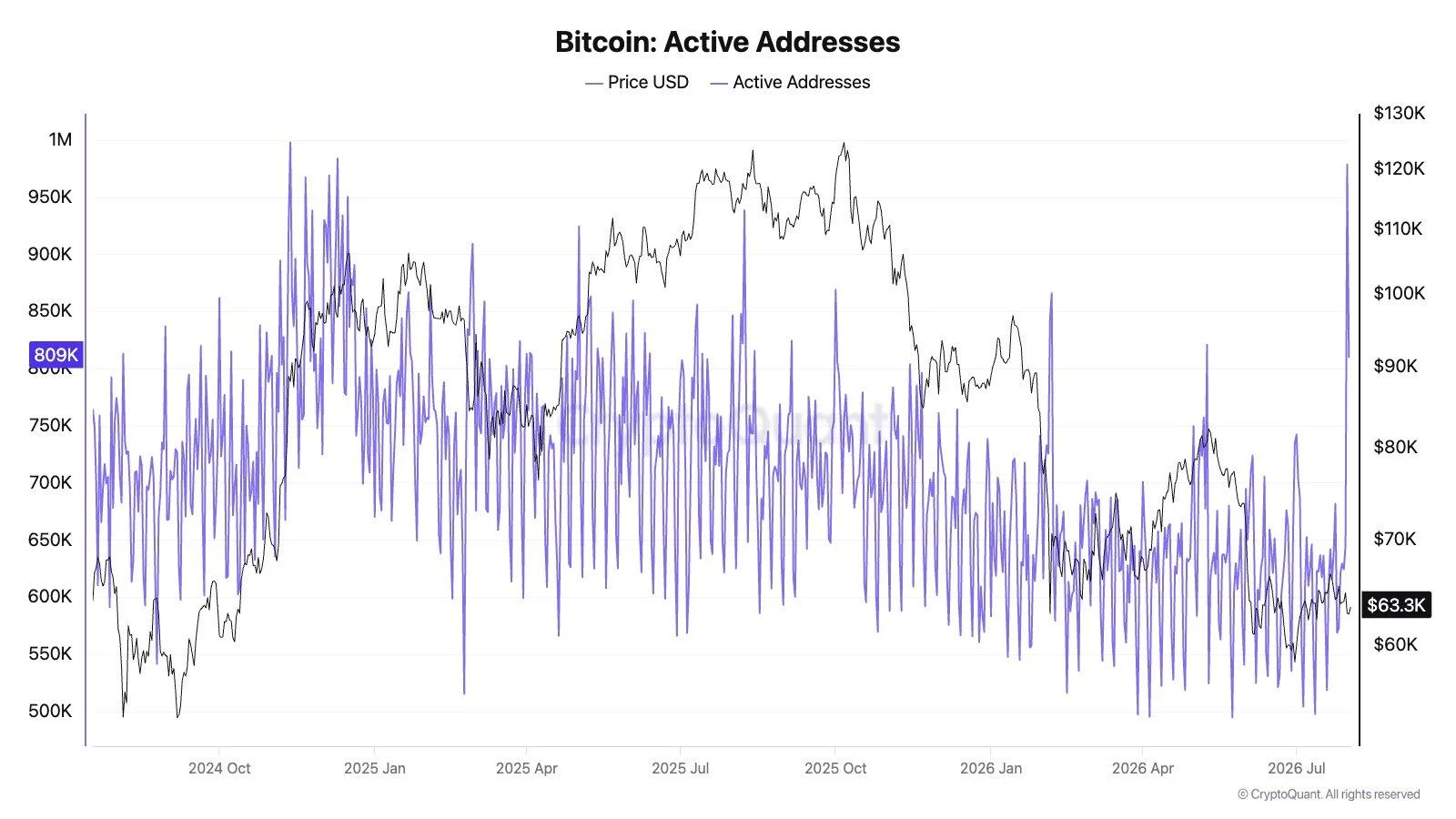
Data highlighted by analytics platforms such as CryptoQuant revealed an immediate and pronounced behavioral shift among smaller bitcoin holders, commonly referred to in market parlance as plebs or retail participants. Rather than holding firm in personal storage solutions, these participants rapidly transferred coins to centralized trading venues in search of immediate operational safety. Daily exchange deposits in smaller transaction brackets surged significantly, marking some of the highest transaction volumes observed since early 2024 and demonstrating deep-seated retail anxiety.
The volume of smaller transfers executed within a single day reached levels not recorded since the chaotic period immediately following the collapse of the FTX exchange. On-chain researchers and market commentators emphasized that active address counts and net inflows into major trading platforms spiked noticeably during the peak of the exploit reporting. This sudden redirection of capital highlights how quickly localized hardware vulnerabilities can alter broader market flows and challenge prevailing custody habits across the cryptocurrency ecosystem.
Contrasting Market Reactions: Coldcard Versus FTX Collapse
The ongoing market response to the Coldcard exploit represents a direct inversion of the historical trends observed during major centralized exchange failures. Following the unexpected collapse of FTX, the primary systemic risk facing investors was platform insolvency, untrustworthy reserve management, and sudden withdrawal freezes. In response to those centralized platform failures, market participants rushed en masse to withdraw their coins from exchanges, driving centralized exchange balances to multi-year lows as self-custody adoption accelerated.
Conversely, the current security incident centers entirely on self-custody infrastructure risk associated with a specific hardware manufacturing line rather than systemic platform default. Because the threat originated inside personal device security domains, retail holders reacted by temporarily relinquishing sovereign custody in favor of centralized institutional infrastructure. Market researchers pointed out that this rare counter-cyclical flow demonstrates the nuanced risk calculus performed by everyday holders when alternating between different structural threat models.
Scope of Affected Entities and Unconfirmed Technical Details
Publisher CoinDesk noted that the exploits were concentrated among users utilizing specific hardware configurations and firmware iterations vulnerable to predictable random number generation. While blockchain sleuths and investigative platforms identified numerous victim addresses and tracked millions of dollars in unauthorized outflows, the full structural extent of the compromise has not been formally verified by independent forensic auditors. Furthermore, statements regarding the exact timeline of the vulnerable firmware releases remain based on preliminary on-chain heuristics rather than comprehensive manufacturer admissions.
The manufacturer, Coinkite, and various industry specialists have faced intense scrutiny regarding how the entropy generation flaw persisted across multiple operational cycles without earlier detection. Observers emphasize that until comprehensive third-party audits and official post-mortems are published, quantitative estimates regarding total stolen funds must be treated as reported figures rather than absolute empirical certainties. This distinction remains crucial for market participants attempting to evaluate the true vulnerability surface of specialized cold storage devices.
Industry Commentary and Broader Security Implications
Prominent industry figures, including high-profile executives and exchange founders, used the incident to publicly re-examine the practical realities of wallet diversification and cold storage security. Public commentary emphasized that relying on a single hardware manufacturer or assuming infallible security from physical offline devices can leave portfolios exposed to deep-seated supply chain and software flaws. These discussions have spurred broader conversations across the digital asset ecosystem regarding the necessity of multi-signature setups and open-source verification protocols.
Security researchers cautioned that the incident should not be generalized as a blanket failure of all self-custody methodologies, as the vulnerability was strictly confined to specific Coldcard implementation architectures. Nevertheless, the psychological impact of the exploits has prompted many retail investors to reassess their personal security posture, balancing the sovereignty of self-custody against the operational convenience and security mitigation offered by major regulated exchanges during periods of market stress.
Conclusion, Entity Impact, and Actionable Next Steps
In conclusion, based on reporting by publisher CoinDesk, the reported Coldcard hardware wallet exploit has inflicted estimated losses approaching $89 million across numerous addresses, driving smaller bitcoin holders to temporarily shift funds back onto centralized exchanges. This market reaction is not officially confirmed by all involved hardware manufacturers, and the ultimate technical scope of the compromise remains reported rather than conclusively verified. Affected entities include Coinkite as the device manufacturer, major centralized platforms such as Binance, Kraken, OKX, and River that absorbed the inflows, and retail bitcoin self-custody users.
As the situation evolves, what changes now is the immediate risk calculus for hardware wallet users, forcing a transition from blind trust in offline devices toward rigorous firmware auditing and multi-vendor diversification. The next action for participants is to independently verify device firmware versions, consult official manufacturer advisories, and avoid signing transactions or generating seed phrases on potentially compromised units until official, verified security patches and forensic investigations are concluded.
Cexvia conclusion
Risk Assessment and Actionable Next Steps
Publisher CoinDesk reported that blockchain analytics firms tracked an estimated $89 million in losses from the Coldcard exploit, driving retail investors to deposit bitcoin onto exchanges. This development remains not officially confirmed by all relevant software teams and hardware manufacturers.
- Risk meaning
- The reported hardware wallet compromise highlights structural entropy flaws in device manufacturing, demonstrating that self-custody is not entirely immune to operational vulnerabilities. When hardware security is compromised, retail sentiment can pivot rapidly back toward centralized intermediary custody.
- User action
- Affected users and self-custody participants should verify firmware versions, review seed generation methods, and monitor official security advisories before transferring assets or altering storage configurations.
Continue reading