Risk Intelligence & Network Security
Coldcard Hardware Wallet Incident Ignites Heavy Onchain Activity and Not Confirmed Security Concerns
CoinDesk reported that a reported $120 million security incident impacting Coldcard hardware wallets has triggered substantial network traffic and memory pool congestion, though specific exploit details remain not officially confirmed.
Overview of the Reported Hardware Wallet Security Incident
Recent reports from publication outlet CoinDesk indicate that a significant security breach affecting Coldcard hardware wallets has begun unfolding, accumulating estimated losses approaching $120 million. This developing situation has captured the immediate attention of digital asset analysts, security researchers, and everyday market participants alike, given the historic reputation of hardware devices as the gold standard for secure offline storage. Because self-custody strategies gained immense popularity following major centralized exchange failures, any disruption or suspected vulnerability within widely utilized hardware wallet ecosystems carries profound psychological and operational implications for the broader cryptocurrency community.
It is critical to emphasize that despite widespread media coverage and active discussions across blockchain intelligence circles, the exact vectors, mechanics, and ultimate financial tallies of this incident remain strictly in the realm of reported news and have not officially confirmed by the device manufacturer or independent forensic investigators. Market participants are forced to navigate an environment characterized by rapid information dissemination and fragmented disclosures, making it exceptionally difficult to separate confirmed technical exploits from speculative commentary circulating within online trading forums and social media channels.
Spike in Bitcoin Memory Pool Activity and Network Metrics
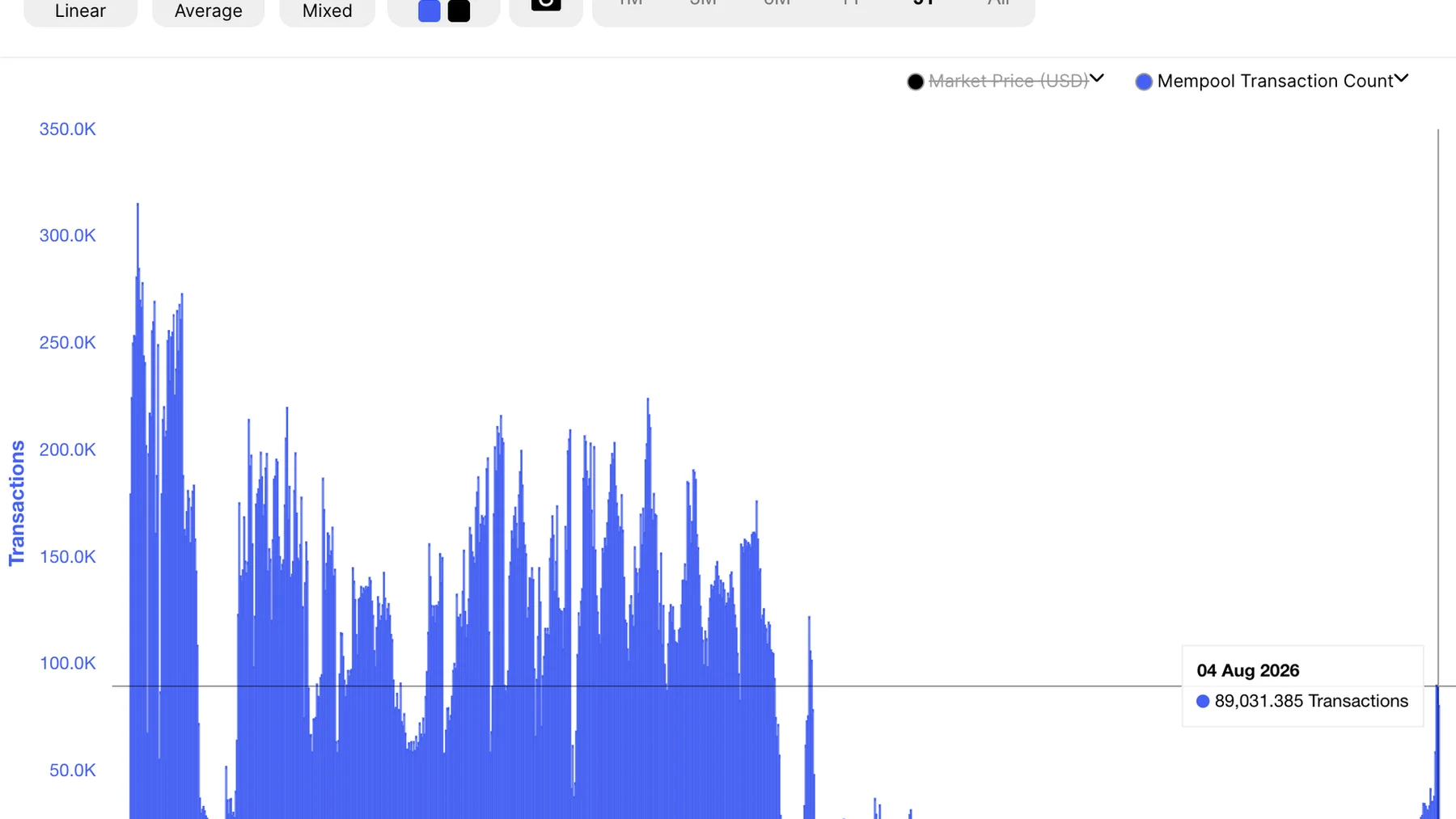
Following the initial news of the security event, onchain data providers including Blockchain.com and Santiment recorded extraordinary shifts in network utilization metrics. The volume of unconfirmed transactions waiting inside Bitcoin's memory pool experienced a sharp upward trajectory, climbing to 89,031 transactions, which represents the highest aggregate count recorded since February 2025. This sudden congestion reflects a massive wave of defensive transactions as coin holders rushed to broadcast transfer instructions, adjust destination addresses, and relocate holdings away from potentially compromised pathways toward safer or more diversified storage architectures.
In tandem with the surging memory pool backlog, additional analytics captured striking milestones across secondary network health indicators. Santiment figures revealed that active blockchain addresses surged to a three-month high of approximately 712,000, while transactions originating from large entity cohorts, commonly categorized as market whales, touched a five-month peak of 61,800. These comprehensive statistical shifts demonstrate that the behavioral reaction to the reported incident extended far beyond retail investors, encompassing institutional and high-net-worth market participants actively restructuring their asset distribution frameworks.
Implications for Self-Custody Strategies and Exchange Alternatives
The unfolding situation has reignited intense debate regarding the optimal balance between sovereign self-custody and third-party financial intermediaries. While the philosophy of direct coin ownership remains foundational to the ethos of digital assets, hardware wallet vulnerabilities demonstrate that physical storage mechanisms are not entirely immune to sophisticated compromise vectors, supply chain risks, or firmware flaws. Consequently, numerous holders began shuffling assets between multiple cold wallets and regulated exchange venues to mitigate single-point-of-failure vulnerabilities, introducing a complex interplay between security practices and liquidity management.
Market observers noted that while this emergency redistribution temporarily inflated network transaction fees and created temporary processing bottlenecks, it also highlighted the resilient nature of decentralized settlement layers. However, relying on centralized platforms as a knee-jerk reaction introduces separate counterparty and regulatory risks, reminding market participants that every custody model entails a distinct risk profile. As analysts evaluate the fallout, the necessity for multi-signature configurations and hardware diversity has emerged as a primary lesson for safeguarding substantial digital asset holdings against unforeseen technological threats.
Broader Macroeconomic Context and Policy Catalysts
Despite the intense operational activity generated within the Bitcoin memory pool, broader cryptocurrency valuations have remained remarkably contained within established trading bands, avoiding catastrophic panics or explosive rallies. Market analysts point out that bitcoin prices continue to hover within the familiar $62,000 to $65,000 range, suggesting that onchain security events are currently being evaluated by macro traders as localized infrastructural disruptions rather than systemic threats to the underlying monetary asset thesis.
According to commentary from specialized trading firms such as Marex and Bitfinex, immediate price catalysts remain heavily tied to legislative and macroeconomic developments rather than standalone security incidents. Specifically, the legislative fate of the Clarity Act in the United States Senate has emerged as an essential binary policy driver, with market participants closely monitoring congressional calendars prior to impending legislative recesses. Concurrently, macroeconomic factors such as real yields on United States 10-year Treasury notes continue to influence institutional risk appetite, providing a persistent backdrop that overshadows short-term network congestion.
Correlated Market Trends and Adjacent Asset Developments
In tandem with developments in the primary cryptocurrency network, several notable trends across adjacent financial and technological sectors captured market attention during the reporting window. An Ethereum network proposal gained prominence for potentially reducing token issuance to zero once staked ETH thresholds reach critical valuation milestones, a mechanism designed to enhance long-term scarcity. Meanwhile, equity and commodity markets experienced notable volatility, with major technology-related equities retreating following intense artificial intelligence spending reports, and oil prices stabilizing downward in response to shifting geopolitical dialogues.
These concurrent developments underscore the complex, multi-asset landscape in which digital asset risk intelligence operates, demonstrating how localized network events interact with broader financial market sentiments. The coexistence of hardware security disruptions, shifting macroeconomic yields, and evolving regulatory debates creates an environment where investors must continuously synthesize diverse data streams to protect capital and maintain robust risk management postures across both decentralized and traditional portfolios.
Conclusion, Entity Impact, and Actionable Guidance
In summary, this risk intelligence report examines the reported $120 million security incident involving Coldcard hardware wallets, which served as a catalyst for substantial network congestion and heightened onchain activity. Publisher CoinDesk documented a surge in Bitcoin memory pool transactions to 89,031 alongside multi-month highs in active addresses and whale transfers, though these technical figures and the underlying exploit specifics remain not officially confirmed by authorized entities or forensic auditors.
The affected entity comprises Coldcard hardware wallet users and self-custody participants navigating emergency asset migrations. What changes now is the heightened urgency for hardware wallet verification, firmware security auditing, and diversified storage strategies across the digital asset community. The immediate next action for users is to independently verify device firmware integrity, monitor mempool fee environments, and re-evaluate counterparty risk exposure across both cold storage and alternative custody solutions while awaiting official verification.
Cexvia conclusion
Assessment of Reported Onchain Congestion and Custodial Shifts
Publisher CoinDesk highlighted that a reported $120 million security compromise involving Coldcard hardware wallets has prompted widespread token migrations, pushing Bitcoin memory pool transactions to multi-month highs, though the underlying mechanics remain not officially confirmed.
- Risk meaning
- Incidents targeting trusted hardware storage solutions generate systemic ripples across self-custody architectures, prompting sudden liquidity shifts to centralized and alternative decentralized venues while elevating operational risks for digital asset participants.
- User action
- Hardware wallet users should carefully verify firmware versions, monitor pending transaction fees, and evaluate counterparty risk across custodial and self-custodial options while awaiting comprehensive forensic audits.
Continue reading