Regulatory Action
OFAC Targets Ministry of Intelligence and Crypto-for-Oil Payments in Major Iran Sanctions
The United States Department of the Treasury has launched Operation Economic Outcast, featuring a first-ever sectoral determination for Iran's digital assets and targeting intelligence hackers and crypto-enabled oil brokers.
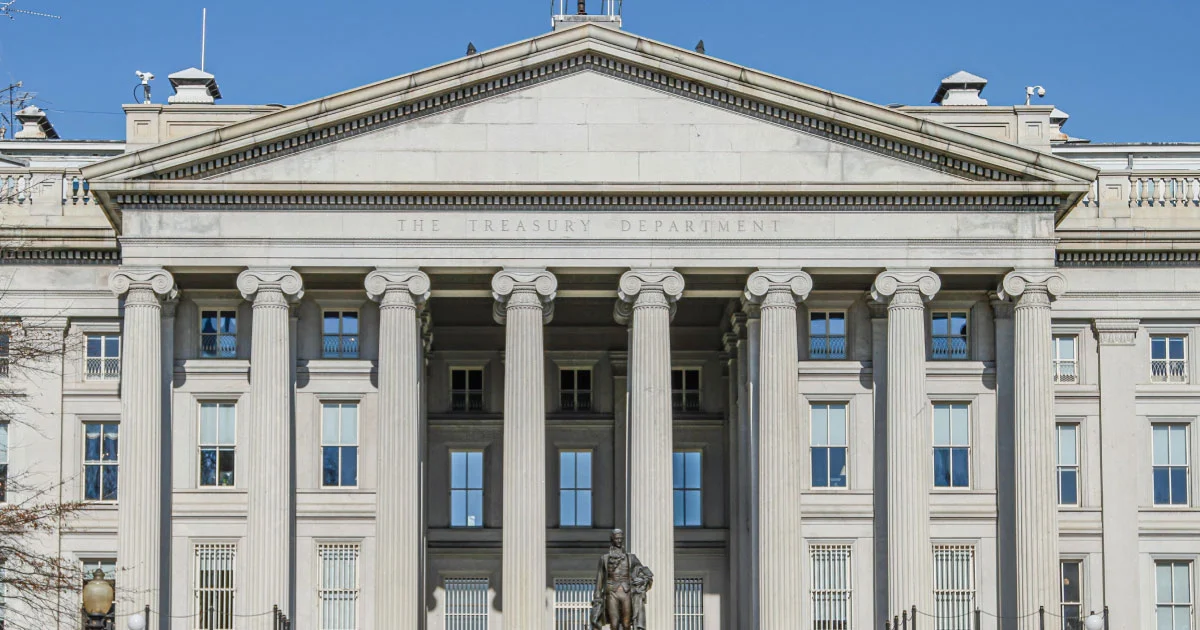
Operation Economic Outcast and Digital Asset Sectoral Determination
The United States Department of the Treasury officially initiated a comprehensive economic pressure campaign designated as Operation Economic Outcast, aimed directly at severing financial conduits sustaining the Iranian regime and its military apparatus. Within this newly formulated framework, the Office of Foreign Assets Control established a groundbreaking sectoral determination that explicitly encompasses the entire digital asset landscape of the Islamic Republic of Iran. This regulatory instrument provides authorities with sweeping powers to penalize foreign persons globally who engage in economic operations within the Iranian digital currency ecosystem, without necessitating a direct nexus to traditional terrorism designations.
This extraordinary expansion of secondary sanctions authority fundamentally alters the compliance landscape for international cryptocurrency businesses, automated market makers, and decentralized finance infrastructure providers. Financial intermediaries operating outside the United States can no longer assume that maintaining distance from designated terrorist lists insulates them from regulatory penalties if their platform routing touches Iranian digital asset liquidity. Compliance officers are consequently forced to re-evaluate institutional risk tolerance thresholds and implement rigorous monitoring protocols across all cross-border transactions.
Ministry of Intelligence and Security Cyber Operations and Wallet Flags
Parallel to broader economic measures, the regulatory authorities targeted specific intelligence operatives embedded within the Ministry of Intelligence and Security who orchestrated sophisticated cyber intrusions against critical infrastructure targets. Investigative findings revealed that multiple high-ranking members of this state-sponsored hacking group utilized cryptocurrency wallets across Bitcoin, Ethereum, and TRON networks to manage operational funds, launder extortion proceeds, and compensate underground initial access brokers. These digital currency addresses have now been formally published on official sanction registries to prevent liquidity laundering.
Further technical analysis uncovered troubling overlaps between state-directed espionage objectives and opportunistic financial crimes committed by individual hackers for personal enrichment. Certain operatives reportedly resold network access acquired during state-sponsored reconnaissance missions to Russian-speaking cybercriminal syndicates, receiving digital asset payments directly into sanctioned wallets. Additionally, infrastructure expenses such as bulletproof hosting services were routinely settled using these same compromised cryptocurrency channels, illustrating the deep entanglement between state intelligence actors and transnational cybercrime.
Crypto-Enabled Oil Brokerage and Shadow Fleet Financing
The enforcement action also exposed extensive utilization of digital currencies to facilitate shadow fleet oil transactions on behalf of the Islamic Revolutionary Guard Corps Qods Force. Investigations highlighted the role of designated brokers operating in foreign jurisdictions who managed massive monetary flows to bypass petroleum export restrictions. Specifically, millions of dollars in cryptocurrency settlements were channeled through complex networks to acquire vessels, pay maritime tolls, and sustain the operational capabilities of military proxies across the region.
The heavy reliance on blockchain assets for petroleum commerce underscores the adaptive nature of sanctioned states attempting to circumvent traditional banking oversight. By substituting conventional wire transfers with decentralized or pseudonymous crypto rails, facilitators sought to obscure the ultimate origin and destination of oil revenues. However, advanced on-chain analytics successfully unmasked these multi-million-dollar payment flows, providing the evidentiary foundation necessary for OFAC to implement targeted designations against the primary brokers involved in these maritime schemes.
Compliance Implications for Global Crypto Exchanges and OTC Desks
Digital asset service providers worldwide must immediately recognize that the introduction of sectoral secondary sanctions radically elevates their exposure to regulatory liability. Compliance teams can no longer rely solely on screening against explicitly designated entity lists, given that the new framework permits sanctions against any entity supporting the Iranian digital asset vertical. Consequently, risk management protocols must incorporate behavioral analysis capable of detecting indirect exposure to high-risk intermediaries, shadow fleet operators, and suspicious peer-to-peer exchangers operating within vulnerable corridors.
Exchanges and over-the-counter trading desks maintaining clients in jurisdictions prone to sanctions evasion must execute comprehensive portfolio reviews to identify counterparties with historical links to Iranian liquidity pools. Failure to upgrade transaction monitoring software and onboarding due diligence standards risks catastrophic enforcement penalties, loss of correspondent banking relationships, and potential exclusion from the regulated global financial system. The regulatory tolerance for passive compliance monitoring has effectively vanished.
Definitive Assessment and Compliance Mandate
The concrete finding of this investigation confirms that OFAC has officially established a broad sectoral determination against Iran's digital assets while sanctioning specific intelligence operatives and oil brokers. The affected entities include designated individuals such as Behzad Mesri, Ivan Obukhov, and associated digital currency wallets, while the impacted user group encompasses all global crypto exchanges, OTC desks, and infrastructure providers interacting with high-risk corridors. Changes now require mandatory integration of advanced blockchain analytics to detect secondary exposure and immediate auditing of all counterparty relationships linked to Iranian jurisdictions.
The next action for compliance leadership is to deploy updated address screening tools across all operational nodes, cross-reference transaction histories with the newly flagged blockchain addresses, and freeze any matching deposits pending legal review. Platforms must adopt a zero-tolerance posture toward unverified intermediaries operating in regions susceptible to sanctions circumvention to safeguard their institutional licensing and operational continuity.
Cexvia conclusion
Definitive Assessment and Compliance Mandate
OFAC introduced a landmark sectoral determination under Executive Order 13902, authorizing global secondary sanctions against any entity operating within Iran's digital asset ecosystem, alongside specific designations of cyber actors and crypto-facilitated oil brokers.
- Risk meaning
- Global cryptocurrency exchanges, over-the-counter desks, and infrastructure providers now face heightened secondary sanctions exposure for any transactional touchpoints with Iranian counterparts or digital asset sectors.
- User action
- Compliance departments across digital asset platforms must instantly audit counterparty exposures, review transactions originating from high-risk intermediaries, and screen wallets against newly updated sanctions lists.
Continue reading