Regulatory Action
Operation Economic Outcast: Treasury Sanctions Nearly 60 Iran-Linked Targets and Designates Digital Assets Sector
The United States Department of the Treasury launched Operation Economic Outcast, designating nearly sixty Iran-linked targets and formally establishing digital assets as a primary sector subject to sweeping secondary sanctions under executive orders.
Campaign Launch and Broad Regulatory Scope
The United States Department of the Treasury officially initiated Operation Economic Outcast, structured as a comprehensive whole-of-government economic campaign directed against the government of Iran and its international enablers. According to official announcements from the Treasury department, the Office of Foreign Assets Control designated nearly sixty distinct entities, individuals, and marine vessels during this major enforcement action. These targeted networks are heavily implicated in a wide range of illicit activities, including nuclear and missile procurement programs, advanced cyber operations, and illicit oil revenue generation designed to sustain state operations.
Secretary of the Treasury Scott Bessent formally framed the aggressive campaign as an unprecedented economic onslaught engineered to systematically sever the complex financial connections that continuously sustain the Iranian regime. Alongside the direct asset freezes and individual listings, the regulatory authorities issued five distinct sectoral sanctions determinations under existing executive authority. These determinations expand the federal government's legal capacity to penalize foreign financial institutions that engage with specific segments of the Iranian economy, fundamentally altering compliance obligations for international operators across multiple commercial domains.
Digital Assets Designated as a Sanctionable Sector
The implementation of five sectoral sanctions determinations under Executive Order 13902 marks a critical turning point for the regulation of virtual currencies and financial technology. By formally naming digital assets, technology, gold, aviation, and shipping as sanctionable sectors, regulatory authorities have shifted the enforcement paradigm. Compliance obligations no longer rely solely on static lists of explicitly prohibited wallet addresses or named corporate entities, but extend directly to the operational environment of entire commercial sectors within targeted jurisdictions.
Under the expanded framework of these sectoral determinations, any international financial institution or digital asset service provider that deliberately processes a significant transaction for an Iranian exchange or related virtual currency business faces immediate exposure to secondary sanctions. This severe regulatory penalty includes the potential complete loss of direct access to the United States financial system. Consequently, crypto exchanges and liquidity providers worldwide must fundamentally overhaul their risk assessment models to detect and prevent indirect exposure to the Iranian digital asset ecosystem before transactions settle.
Targeted Cyber Operations and Associated On-Chain Footprint
The enforcement actions closely parallel substantial legal measures taken by the Department of Justice, which unsealed a superseding indictment against numerous members of the Mabna Institute. This Iran-based organization has operated as a sophisticated hacking-for-hire entity since at least 2013, executing coordinated cyber intrusions against numerous universities, private sector corporations, and government agencies globally. The Department of Justice noted that the group successfully compromised critical infrastructure and stole massive volumes of intellectual property, leading to criminal charges against multiple individual actors associated with the enterprise.
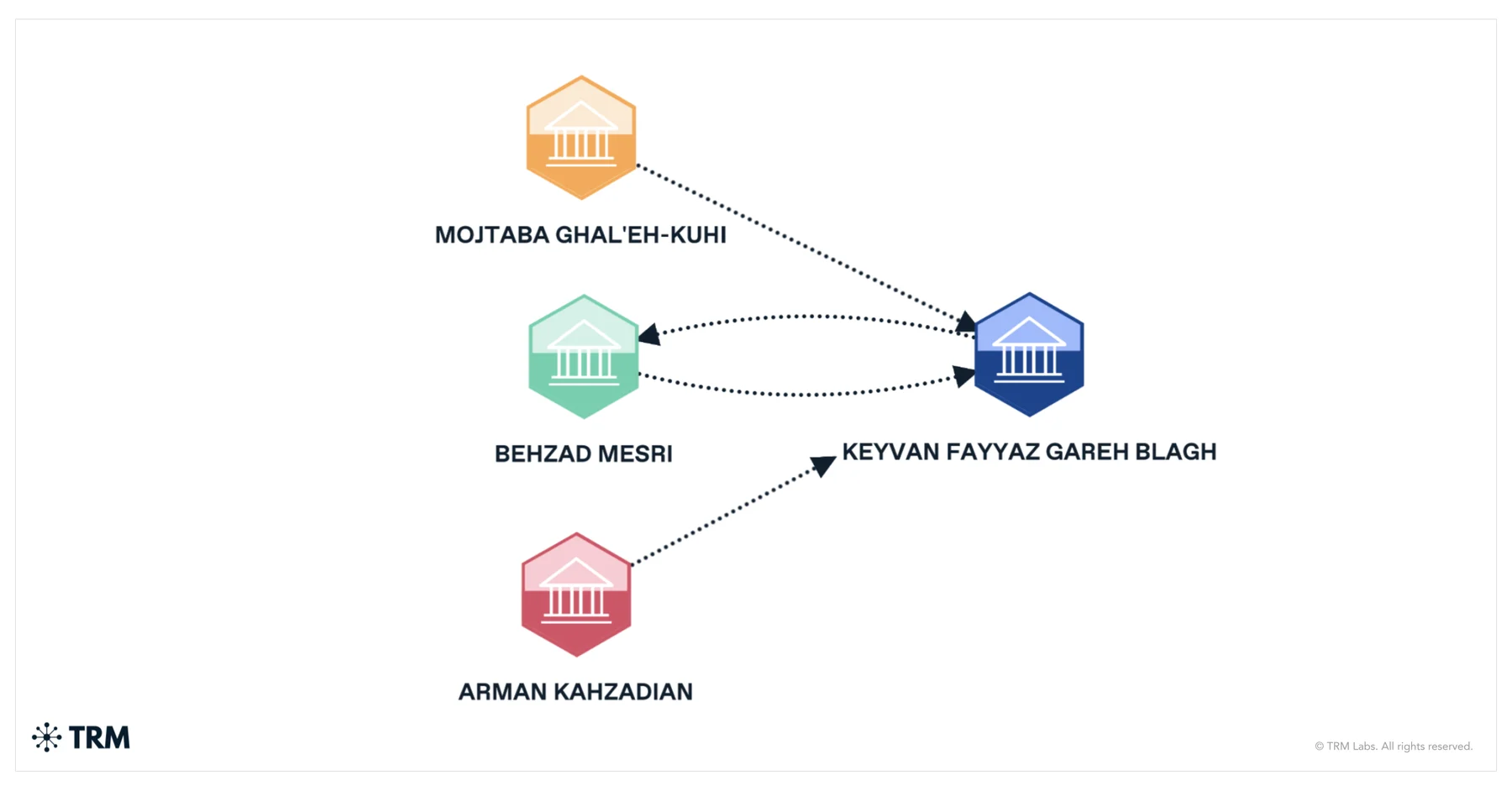
Blockchain analytics investigation into the thirty specific cryptocurrency addresses designated by the Treasury revealed that these wallets received significant funds originating from various illicit operations. The total volume passing through these specific Bitcoin, Ethereum, and TRON addresses reached substantial multi-million-dollar figures over several years of activity. A massive proportion of this cumulative on-chain volume was heavily concentrated within specific addresses controlled by a primary defendant, illustrating a centralized treasury model utilized to manage the financial proceeds of state-sponsored cyber intrusions and hacking campaigns.
On-Chain Compliance Implications and Obfuscation Tactics
Despite the considerable historical transaction volumes identified across the designated wallets, on-chain analytics indicate that the current residual balances remaining within these specific addresses are relatively minimal. This observed discrepancy highlights a common operational security practice among sophisticated threat actors, who routinely transfer funds out of initial receipt locations to prevent immediate asset freezing. Funds are frequently funneled through complex webs of intermediary addresses and layered transactions before reaching large centralized exchange deposit addresses designed to liquidate the digital assets into fiat currency.
For blockchain intelligence teams and compliance professionals, these findings emphasize that low residual wallet balances do not equate to an absence of risk or historical exposure. Compliance departments must proactively review historical transaction records to identify any historical touchpoints with the identified wallet infrastructure. Furthermore, monitoring systems must be configured to recognize obfuscation patterns and layered transaction structures that signal attempts to obscure the ultimate origin of funds moving across public blockchain networks.
Operational Remediation and Strategic Next Steps
Finding: The United States Department of the Treasury has officially categorized digital assets as a primary sanctionable sector under Operation Economic Outcast, designating nearly sixty Iran-linked targets including specific cryptocurrency addresses associated with indicted cyber actors. Affected entity: Digital asset exchanges, OTC desks, and global cryptocurrency service providers interacting with Iranian counterparties or processing cross-border transactions. Affected user group: Institutional and retail cryptocurrency participants utilizing platforms with insufficient sectoral screening capabilities or exposure to secondary sanctions risk. What changes now: Compliance protocols must immediately expand beyond static address blacklists to incorporate comprehensive sector-level screening for all transactions involving Iranian digital asset infrastructure.
Next action: Compliance teams at all regulated cryptocurrency businesses must immediately audit their transaction monitoring systems, review historical ledger data for indirect exposure to the newly designated wallet clusters, and implement strict risk controls to block any future transactions linked to the newly defined sanctionable sectors. The organization must verify that all automated screening tools are updated to detect secondary sanctions exposure under Executive Order 13902 before any further cross-border digital asset transfers are executed or cleared.
Cexvia conclusion
Comprehensive Sector Compliance Mandated Following Treasury Enforcement
The United States Treasury designated nearly 60 targets linked to Iran and categorized digital assets as a primary sanctionable sector, impacting global crypto compliance and exposing service providers to severe secondary penalties.
- Risk meaning
- Failing to screen for sector-level exposure beyond explicit wallet lists creates extreme regulatory liabilities, as any significant transaction processing for Iranian digital asset businesses now threatens international financial access.
- User action
- Crypto businesses and compliance teams must immediately audit historical transaction records, screen incoming flows for indirect links to newly listed addresses, and implement robust sector-wide monitoring mechanisms.
Continue reading