Regulatory Risk & Compliance
TRM Labs Strengthens Asia-Pacific Regulatory Engagement by Appointing Former Monetary Authority of Singapore Official as Head of Policy
TRM Labs has named former Monetary Authority of Singapore and Sygnum executive Ziqing Ang as its new Head of Policy for the Asia-Pacific region, marking a strategic push to align crypto intelligence tools with emerging regional regulatory frameworks.
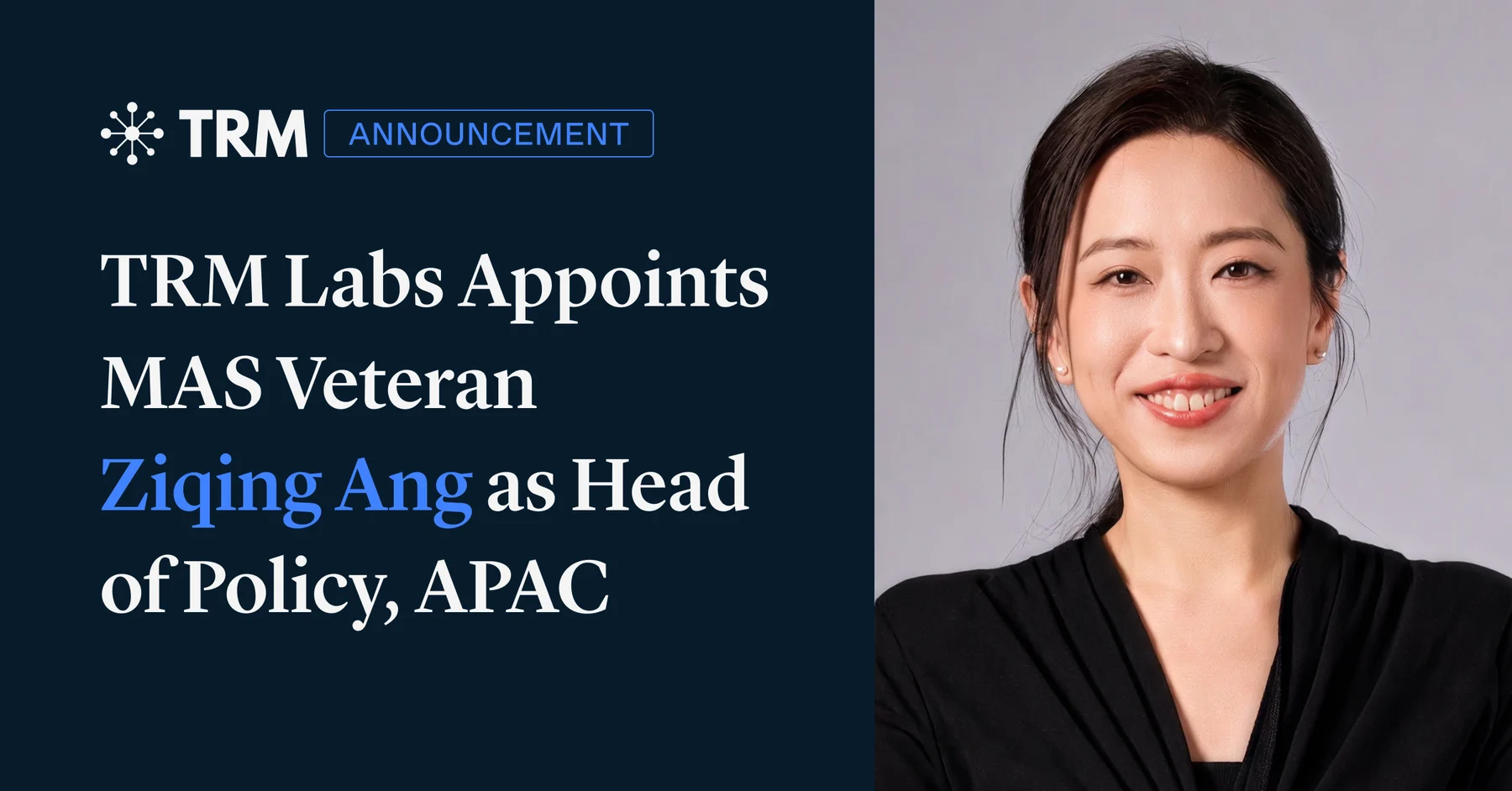
Strategic Leadership Appointment in the Asia-Pacific Region
The blockchain intelligence and security sector has witnessed a notable administrative expansion as TRM Labs officially announced the recruitment of Ziqing Ang to direct its regional policy initiatives across the Asia-Pacific landscape. The newly appointed executive brings more than a decade of specialized expertise gained at the intersection of traditional financial markets, central banking regulation, institutional business development, and digital asset compliance infrastructure. Her professional background includes significant tenure at the Monetary Authority of Singapore, where she spent over eight years navigating financial markets development and reserve management while coordinating strategic initiatives designed to elevate Singapore's capital markets ecosystem.
Following her tenure within the public sector, the incoming policy head transitioned into the commercial digital asset ecosystem by joining Sygnum, recognized globally as an early regulated digital asset institution, functioning in key business development capacities. Her career progression further encompassed a leadership role as Chief Business Officer at Bright Point International Digital Assets, where she directed the establishment of institutional over-the-counter brokerage operations and associated compliance frameworks. This extensive combination of public regulatory grounding and commercial market execution positions her to navigate the complex multi-jurisdictional environment characteristic of the modern digital asset industry.
Evolving Threat Landscapes and Escalating Regional Crime Volumes
The strategic reinforcement of compliance advisory and policy engagement teams arrives at a critical juncture marked by unprecedented transformations in how illicit financial networks utilize technology across the Asia-Pacific territory. According to operational tracking data compiled by intelligence platforms, adjusted cryptocurrency crime volumes expanded dramatically from historical baselines to multi-billion-dollar thresholds over recent reporting cycles. Investment fraud schemes, prominently including sophisticated pig-butchering operations, have constituted the vast majority of fraudulent inflows into digital asset ecosystems, necessitating an equally sophisticated response from both law enforcement agencies and private sector compliance teams.
Compounding these traditional financial exploitation tactics is the rapid integration of generative artificial intelligence by criminal organizations attempting to evade automated detection protocols and deceive vulnerable retail participants. Intelligence metrics have documented a substantial increase in AI-driven scam vectors, ranging from synthetic deepfake recruitment materials to entirely fabricated institutional account dashboards. As these malicious capabilities transition from experimental concepts into fully operational criminal infrastructure, regional regulatory bodies are rushing to construct comprehensive governance frameworks that can effectively encompass both digital assets and advanced artificial intelligence technologies.
Public-Private Partnerships and Regulatory Harmonization Efforts
Navigating the complex interplay between rapid technological innovation and rigorous consumer protection requires an unprecedented degree of collaboration between government authorities, law enforcement bodies, and financial institutions across the globe. Industry leaders emphasize that the coming years will definitively shape the safety architecture of the entire digital asset ecosystem, particularly as governments throughout Asia-Pacific attempt to codify comprehensive regulatory perimeters. Establishing open channels of communication between the entities writing legislative statutes and the commercial enterprises deploying blockchain intelligence tools remains an absolute operational prerequisite for sustainable industry growth.
The integration of former regulatory officials into corporate compliance frameworks serves to bridge the historical communication gap that frequently hinders effective cross-border investigations and timely threat mitigation. By translating public sector expectations into actionable private sector risk parameters, compliance advisory teams can assist exchanges and fintech platforms in preemptively addressing vulnerabilities before illicit actors can exploit them. This proactive approach ensures that compliance protocols remain flexible enough to adapt to novel technological threats while maintaining strict adherence to international anti-money laundering standards and counter-terrorist financing mandates.
Expansion of Regional Intelligence and Compliance Infrastructure
The appointment of the new Asia-Pacific policy lead does not represent an isolated administrative change but forms a core component of a broader organizational expansion strategy currently being executed across multiple international hubs. This strategic trajectory previously included the recruitment of other prominent regulatory veterans, such as the appointment of former Monetary Authority of Singapore supervisor Claudia Hui to direct compliance advisory operations within the same territory. These targeted personnel additions reflect a corporate commitment to establishing deep, localized expertise capable of engaging constructively with local regulators as compliance expectations continue to evolve.
Maintaining robust operational infrastructure across decentralized global hubs allows intelligence platforms to provide continuous, high-consequence support to hundreds of government agencies and financial institutions spread across numerous countries. As criminal syndicates increasingly professionalize their operations and leverage cross-border payment rails alongside advanced machine learning obfuscation techniques, intelligence providers must similarly scale their human and technological resources. The ongoing recruitment across applied artificial intelligence, machine learning engineering, data science, and investigative operations underscores the continuous need for advanced analytical capabilities in high-stakes compliance environments.
Conclusion, Entity Impact, and Actionable Next Steps
In conclusion, TRM Labs has formally appointed former Monetary Authority of Singapore veteran Ziqing Ang as its Head of Policy for the Asia-Pacific region to spearhead regulatory engagement and combat rising cryptocurrency crime and AI-driven financial fraud. This structural reinforcement directly impacts digital asset exchanges, financial institutions, and retail user groups across the entire Asia-Pacific jurisdiction by accelerating the alignment of private risk intelligence with emerging governmental compliance mandates. As regulatory frameworks crystallize around digital assets and artificial intelligence, the operational threshold for compliance within the region is permanently elevated, requiring immediate institutional adaptation.
Affected entities and compliance officers must take immediate action by reviewing their current transaction monitoring systems, updating internal risk assessment parameters to account for sophisticated artificial intelligence scam vectors, and establishing direct channels for regulatory reporting. Exchanges operating within the Asia-Pacific territory must audit their existing Know-Your-Customer and anti-money laundering frameworks against institutional-grade standards to ensure full readiness for intensified cross-border enforcement coordination and more stringent oversight by regional authorities.
Cexvia conclusion
Executive Assessment and Operational Outlook
TRM Labs appointed former Monetary Authority of Singapore veteran Ziqing Ang to lead its Asia-Pacific policy and regulatory engagement operations, aiming to bridge public sector agencies and private crypto institutions amid rising regional fraud and generative artificial intelligence threats.
- Risk meaning
- The strategic placement of seasoned central bank regulators into private intelligence leadership positions underscores how compliance expectations are tightening across key digital asset jurisdictions throughout the Asia-Pacific territory.
- User action
- Crypto exchanges and digital asset institutions operating within Asia-Pacific must proactively review their regulatory reporting protocols, align internal transaction monitoring standards with institutional-grade risk frameworks, and prepare for intensified cross-border enforcement coordination.
Continue reading