Regulatory Risk Intelligence
Trump Business Empire Expands Into Artificial Intelligence Amid Unconfirmed Conflict Concerns
Crypto Briefing reported that business ventures linked to the Trump family are expanding into artificial intelligence, defense, and energy sectors, raising questions about regulatory fairness and potential conflicts of interest. These developments remain not officially confirmed by independent regulatory bodies.
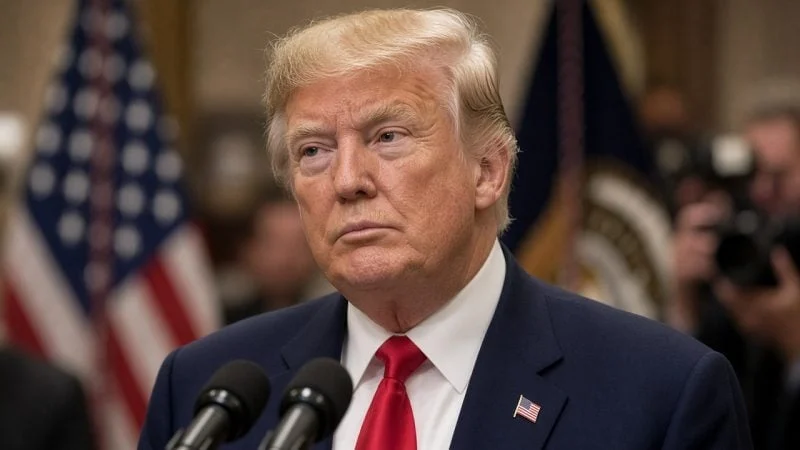
Overview of Reported Technology Ventures
According to reporting published by Crypto Briefing on September twenty twentieth, two thousand twenty six, business ventures associated with the family of Donald Trump have expanded significantly into the artificial intelligence, defense, and energy sectors. The published reporting details how family-linked investment vehicles, including specialized venture funds, have established financial positions in various technology firms, semiconductor manufacturers, and digital infrastructure providers. These reported activities demonstrate a broad corporate strategy aimed at capturing value across the entire computing stack, from foundational hardware components to advanced energy generation facilities required to power large-scale data centers. Industry analysts and observers following the developments note that the scale of these reported investments introduces unprecedented intersections between high-level public policy formulation and private commercial enterprise.
Furthermore, the reported corporate footprint reportedly extends to major nuclear fusion initiatives and specialized defense contracting agreements, highlighting a multi-faceted approach to technological infrastructure development. Crypto Briefing noted that these commercial undertakings occur alongside official proposals to establish specialized governmental entities designed to accelerate national technological capabilities. While the reported transactions and corporate expansions illustrate an aggressive push into emerging technologies, market participants must evaluate the broader systemic implications of such widespread private sector involvement by individuals closely connected to the highest levels of government power. Independent observers emphasize that the full extent and operational structure of these reported ventures continue to be examined by financial journalists and market watchdogs seeking transparency regarding potential policy overlaps.
Defense Contracts and Corporate Expansion
The reporting from Crypto Briefing highlights that entities connected to the Trump family have reportedly secured substantial financial backing, including hundreds of millions of dollars in loans earmarked for infrastructure development. These reported funding arrangements are intended to support the construction and expansion of advanced computing centers necessary for next-generation machine learning models. Corporate disclosures and media investigations cited in the report suggest that family members utilize various private equity vehicles and direct equity purchases to acquire stakes in major hardware producers and energy infrastructure enterprises that stand to benefit directly from federal technology initiatives. The intersection of public funding mechanisms and private investment portfolios forms the core of the reported concerns regarding potential conflicts of interest within the technology sector.
In addition to infrastructure loans, the reporting outlines ambitious proposals for specialized administrative structures modeled after existing military branches, which could theoretically command substantial federal budgets for technology procurement. Critics and independent commentators cited in the publication argue that creating dedicated governmental units focused on artificial intelligence while simultaneously maintaining private investments in the underlying hardware and energy suppliers creates an environment vulnerable to perceived favoritism. However, these interpretations and allegations remain strictly within the domain of media reporting and have not been officially confirmed by independent oversight bodies, regulatory agencies, or the entities named in the source publication. Consequently, stakeholders are advised to maintain a cautious perspective when evaluating the long-term viability and governance implications of these corporate maneuvers.
Energy Demands and Nuclear Fusion Initiatives
A significant component of the reported enterprise expansion involves the intersection of artificial intelligence computational requirements and large-scale energy generation. According to Crypto Briefing, corporate entities linked to the administration have pursued major strategic mergers focusing on nuclear fusion technology to address the immense power demands associated with modern data centers. The reported transaction involves multi-billion-dollar corporate combinations aimed at developing sustainable and continuous energy sources capable of powering extensive server farms without placing undue strain on traditional electrical grids. By integrating energy generation directly with computational infrastructure development, the enterprise model seeks to control both the processing power and the electricity required to sustain it, representing a vertically integrated approach to modern technology markets.
This strategic focus on energy independence and fusion technology carries significant implications for commodity markets and utility providers operating within major jurisdictions. The reported alignment between energy infrastructure projects and advanced computing ventures suggests that future technological dominance will depend as much on electrical generation capacity as it does on algorithmic sophistication. Nevertheless, independent analysts caution that nuclear fusion technology remains in complex developmental phases with substantial technical and regulatory hurdles yet to be overcome. As a result, the practical execution and commercial success of these reported energy initiatives are not officially confirmed and must be assessed against realistic engineering timelines rather than speculative corporate projections.
Regulatory Streamlining and Governance Discourse
The administrative environment surrounding these reported ventures has experienced notable shifts, characterized by Executive actions designed to reduce regulatory barriers for data center construction and energy project approvals. Crypto Briefing reported that federal policies have increasingly signaled that heavy-handed oversight of artificial intelligence development constitutes a competitive disadvantage on the global stage, particularly in relation to international competitors such as China. By streamlining environmental reviews and accelerating project permits, the administration aims to foster a rapid innovation cycle. However, this deregulatory approach intersects directly with the private investment activities of individuals linked to the executive branch, generating widespread discussion regarding governance standards, institutional integrity, and potential conflicts of interest among ethics watchdogs and legal scholars.
Public discourse surrounding these governance issues reflects deep divisions regarding the appropriate boundaries between political leadership and private commercial accumulation. While supporters of the current trajectory argue that aggressive deregulation and national prioritization are essential for securing technological leadership, critics emphasize the necessity of maintaining strict ethical firewalls to preserve public trust in regulatory fairness. The reported overlap between policy formulation and family-linked business portfolios underscores the ongoing challenges of regulating emerging technologies in an era where political influence and venture capital are closely intertwined. Independent legal experts continue to evaluate whether existing statutory frameworks are adequately equipped to address the complex governance questions raised by these developments, even as the core factual assertions remain officially unconfirmed by the relevant regulatory authorities.
Conclusion and Risk Assessment
In conclusion, this risk intelligence report finds that Crypto Briefing has documented significant artificial intelligence, defense, and energy expansions linked to the Trump family, alongside deregulatory policy shifts that benefit the technology sector broadly. These reported developments directly affect the enterprise entities, investment vehicles, and digital asset protocols associated with the named individuals, while creating complex compliance environments for general market participants and decentralized finance users. However, it must be emphasized that these allegations and corporate connections remain not officially confirmed by independent regulatory bodies or first-party sources, meaning that reported financial figures and contractual agreements should be viewed with appropriate skepticism until formally verified.
As the situation evolves, the next necessary action for digital asset participants, institutional investors, and compliance officers is to implement rigorous monitoring frameworks that track both administrative policy announcements and verifiable corporate disclosures. Stakeholders must avoid speculative positioning based solely on media reports and instead focus on maintaining robust risk management strategies across diversified, non-affiliated networks. By separating verified regulatory actions from unconfirmed media allegations, organizations can better navigate the complex intersection of political influence and technological investment without exposing themselves to unforeseen compliance or reputational vulnerabilities.
Cexvia conclusion
Conclusion and Risk Assessment
Crypto Briefing reported that family-linked investment vehicles and corporate structures have secured defense contracts and technology stakes while administration policies reduced regulatory barriers for artificial intelligence development. This reporting is not officially confirmed and requires ongoing monitoring.
- Risk meaning
- Intersection of political influence and private technology investments creates complex compliance challenges for digital asset firms and decentralized finance protocols associated with politically exposed persons.
- User action
- Participants in affected decentralized finance platforms and token ecosystems should monitor regulatory developments closely and maintain diversified risk strategies across non-affiliated networks.
Continue reading