Regulatory Risk
Crypto Empire Concerns Undermine Clarity Act While Bitcoin Surges Past $80,000
According to reporting by CryptoTicker published on September 19, 2026, the Digital Asset Market Clarity Act failed in the United States Senate amid accusations linking the bill's defeat to presidential crypto ventures. Despite this regulatory setback, Bitcoin crossed $80,000 driven by macroeconomic factors, which remains not officially confirmed by independent regulatory audits.
Legislative Defeat in the Senate
CryptoTicker reported that the Digital Asset Market Clarity Act failed to secure the necessary sixty votes required to advance within the United States Senate, concluding months of intensive negotiations without even producing a simple majority. Only forty-nine senators cast affirmative ballots, while fifty senators opposed the measure, encompassing every member of the Democratic caucus alongside four Republicans. The proposed legislation intended to establish a comprehensive federal framework for digital assets, systematically dividing oversight responsibilities between the Securities and Exchange Commission and the Commodity Futures Trading Commission while establishing formal registration mandates and enhanced anti-money-laundering protections. Critics persistently argued that allocating the majority of authority to the smaller Commodity Futures Trading Commission represented an industry tactic to evade rigorous regulatory oversight, an assertion consistently rejected by prominent digital asset executives.
Republican congressional leadership made a final attempt to salvage the legislative package by introducing a revised version that incorporated additional ethics restrictions designed to address Democratic concerns regarding public officials potentially profiting from digital assets. However, this last-minute modification proved insufficient to alter the outcome. Senator Cynthia Lummis bluntly acknowledged the demise of the initiative, noting that the drafting team had previously conceded more than one hundred and twenty specific requests originating from Democratic lawmakers. When questioned regarding any future prospects for returning the measure to the floor, legislative architects confirmed that the current legislative path has reached a definitive end, leaving the broader digital asset sector without a dedicated federal statutory framework for the foreseeable future according to the published reports.
Industry Criticism and Presidential Ventures
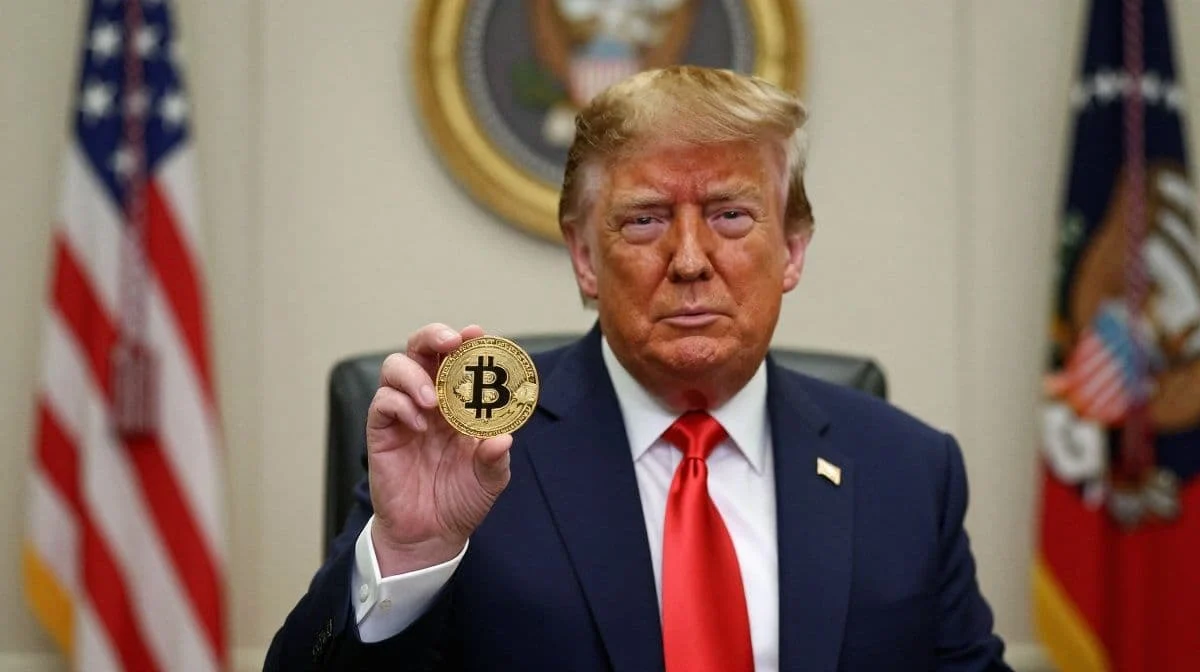
As reported by CryptoTicker, the initial reaction within the digital asset industry directed blame squarely toward Senate Democrats, but within a brief twenty-four-hour window, the primary focus of criticism shifted dramatically toward the executive branch. A rapidly expanding debate within the community began evaluating whether the substantial financial gains generated by the executive branch's cryptocurrency ventures successfully transformed a technical market-structure bill into an intense referendum on presidential ethics. Industry estimates and public discussions highlighted billions of dollars in income associated with these digital asset initiatives launched near the time of the presidential inauguration, creating significant political friction during critical legislative negotiations. Prominent advisory figures and industry analysts noted that the convergence of personal financial interests and legislative reform proved toxic to bipartisan cooperation, effectively torpedoing any viable compromise in a closely divided legislative chamber.
The political opposition seized upon identical arguments from across the aisle, utilizing the existence of these commercial ventures to question the sincerity of proposed ethics compromises. Senator Elizabeth Warren publicly dismissed the late-stage Republican ethics concessions as an inadequate protective measure that failed to address the foundational conflict of interest inherent in executive digital asset involvement. Beyond ethical considerations, traditional banking institutions and community bank associations lobbied aggressively against specific provisions within the bill, most notably a clause that would have permitted stablecoin issuers to distribute interest payments directly to end customers. Commercial banking lobbyists argued that allowing cryptocurrency firms to compete directly for customer deposits without imposing corresponding bank-level regulatory burdens presented an unacceptable systemic risk. Consequently, ethical concerns provided Democrats with a unified rationale to vote against the measure, while banking competition aligned a crucial contingent of conservative lawmakers with the opposition.
Macroeconomic Drivers Behind Bitcoin's Rally
According to CryptoTicker's market observations, textbook financial logic dictates that the failure of a major regulatory bill should generate significant downward pressure on asset valuations. The digital asset market initially reflected this assessment when valuations experienced a sharp pullback, driving Bitcoin down toward September lows as escalating global bond yields and rising petroleum prices collectively squeezed risk-sensitive assets. Within the immediate twenty-four-hour period following the legislative defeat, various major digital assets including prominent alternative tokens registered steep percentage losses as leveraged positions were hastily unwound. However, this downward trajectory experienced a dramatic reversal when a sudden influx of capital at the traditional Wall Street opening bell propelled Bitcoin upward by substantial margins, establishing local highs on major international trading venues as broader commodity supply concerns resurfaced.
The rapid price recovery was significantly accelerated by derivative market liquidations, as data providers recorded substantial cross-crypto short position liquidations occurring within a remarkably condensed timeframe. Market analysts observed that macroeconomic variables, specifically petroleum pipeline disruptions and significant government bond auctions, exerted a far more potent influence on near-term price action than the legislative outcomes in Washington. The US thirty-year Treasury yield surged significantly amid renewed uncertainty surrounding energy supplies, prompting central banks across multiple major jurisdictions to evaluate restrictive monetary policies. Technical analysts identified crucial price thresholds for Bitcoin, noting that reclaiming specific moving averages established a sturdy support floor, while corporate treasury cost bases served as critical psychological markers to determine whether the sudden price movement represented a genuine structural breakout or merely a transient short squeeze.
Regulatory Transition to Federal Agencies
CryptoTicker noted that the immediate practical consequence of the legislative impasse is that day-to-day conditions for digital asset holders remain completely unaltered, with no sudden introduction of novel compliance mandates, taxation structures, or exchange obligations. Instead, the locus of formal rulemaking shifts entirely from Congress to independent federal regulatory agencies, a bureaucratic venue that the digital asset industry spent extensive financial resources attempting to circumvent. The Securities and Exchange Commission previously introduced a comprehensive package titled Regulation Crypto Assets, which was designed to permit emerging digital asset enterprises to raise limited capital without undergoing full securities registration, alongside specific safe harbor provisions intended to alter the legal classification of tokens once designated operational objectives are successfully achieved by issuers.
Despite the ongoing regulatory transition, industry experts emphasized that rules promulgated by administrative commissions lack the permanence and legal durability associated with statutory enactments passed by Congress, as administrative directives can be readily modified or rescinded by subsequent presidential administrations. Furthermore, only the legislative branch possesses the constitutional authority to grant the Commodity Futures Trading Commission genuine, comprehensive statutory jurisdiction over spot digital asset markets, representing the fundamental distinction between a durable federal framework and a temporary regulatory accommodation. Compounding this challenge is an exceptionally constrained legislative calendar, with upcoming political events and limited operational days remaining in the legislative session leaving virtually no practical window for reviving the initiative before subsequent congressional transitions take effect according to published market commentary.
Strategic Outlook and Investor Takeaways
As detailed in the reporting by CryptoTicker, market participants navigating the current landscape must prioritize specific macroeconomic indicators and regulatory developments in order of relative impact. First, ongoing fluctuations in global petroleum markets and long-term bond yields will dictate near-term price direction, confirming that digital assets currently trade primarily as high-beta macroeconomic instruments rather than isolated policy-driven assets. Second, close observation of the administrative comment process surrounding the Securities and Exchange Commission's proposed rules provides the primary venue for understanding future compliance standards within the domestic jurisdiction. Third, upcoming electoral cycles will ultimately determine whether any comprehensive market-structure legislation retains a viable pathway toward enactment in future congressional sessions.
In conclusion, the failure of the Clarity Act marks a pivotal regulatory stalemate affecting all digital asset market participants, driven by ethics concerns surrounding presidential crypto ventures and banking opposition, though these reports remain not officially confirmed. The affected entity is the United States digital asset industry, and the affected user group comprises retail and institutional cryptocurrency investors. What changes now is that rulemaking shifts permanently from Congress to federal regulatory agencies like the Securities and Exchange Commission, introducing enduring compliance uncertainty. The next action for investors is to monitor macroeconomic oil and yield data alongside agency-level comment periods while recognizing that market pricing remains uncoupled from legislative outcomes.
Cexvia conclusion
Regulatory Stalemate and Market Resilience
The Clarity Act failed to achieve the necessary votes in the United States Senate following heated debate over digital asset ventures and banking competition, while Bitcoin subsequently rallied past $80,000 due to short liquidations and macroeconomic drivers, though these developments are not officially confirmed.
- Risk meaning
- The failure of legislative efforts shifts regulatory enforcement back to federal agencies like the Securities and Exchange Commission, introducing long-term uncertainty for compliance standards while demonstrating that crypto markets are increasingly driven by macro factors rather than policy outcomes.
- User action
- Market participants must monitor ongoing macroeconomic shifts, interest rate changes, oil supply developments, and agency-level rulemaking processes while exercising caution regarding volatility tied to regulatory policy changes.
Continue reading