Geopolitical Risk
Donald Trump faces sanctions conundrum over Iran amid China risks
According to reporting by Crypto Briefing, Donald Trump's administration faces a complicated sanctions conundrum regarding Iran because the measures lack impact without addressing China's oil purchases, which remains not officially confirmed by overarching bilateral trade treaties.
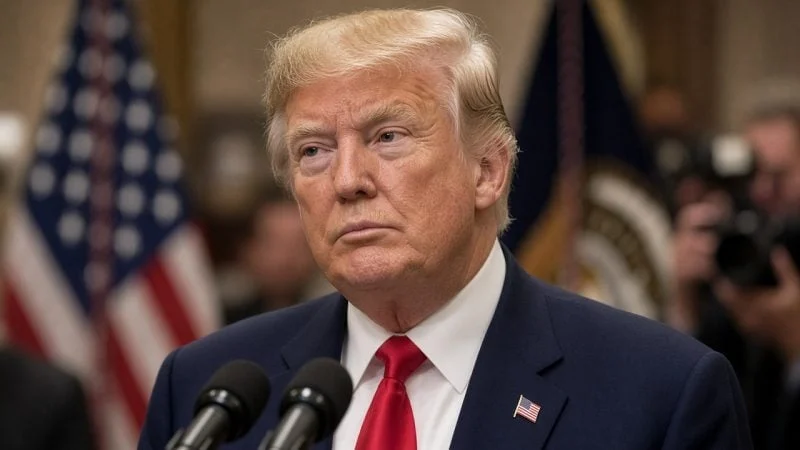
Overview of Operation Economic Outcast and Treasury Actions
According to reporting by Crypto Briefing published on August 30, 2026, the United States Department of the Treasury introduced a sweeping sanctions package designated as Operation Economic Outcast. Treasury Secretary Scott Bessent initiated this extensive campaign on August 24, directing regulatory and economic pressure against more than sixty distinct entities, private individuals, and commercial vessels linked directly to Iran's petroleum export framework, nuclear advancement initiatives, and clandestine cyber operations. The administration framed this newly deployed enforcement initiative as an economic D-Day designed to severely restrict the financial capabilities of the Iranian government across multiple sectors of its domestic economy.
Furthermore, the reported scope of Operation Economic Outcast extends significantly beyond traditional crude oil transport networks into emerging financial domains. New sectoral restrictions target digital asset transactions, advanced technology supply chains, precious metals including gold, commercial aviation, and maritime shipping infrastructure. This multi-layered financial strategy operates in tandem with an ongoing United States naval blockade against Iran, forming a comprehensive six-month military and economic campaign. Despite the broad array of targeted industries and the aggressive rhetoric accompanying the rollout, industry analysts and financial market participants have questioned the ultimate efficacy of these sweeping measures without a more direct confrontation with major international buyers.
The China-Shaped Vulnerability in the Enforcement Strategy
The fundamental challenge facing the current sanctions architecture, as detailed by Crypto Briefing, lies in a persistent structural discrepancy regarding the ultimate destination of Iranian petroleum. Independent market estimates indicate that the People's Republic of China accounts for approximately eighty to ninety percent of all seaborne crude oil exported by Tehran. Consequently, attempting to enforce restrictive measures against minor intermediaries, anonymous shell companies, and obsolete transport tankers without addressing the primary sovereign buyer is mathematically equivalent to attempting to drain a swimming pool using a standard household coffee mug, according to critical assessments of the policy.
United States officials have conspicuously chosen to avoid implementing broad secondary sanctions against major Chinese financial institutions, favoring a surgical approach that focuses exclusively on smaller entities while keeping prominent Beijing banks entirely untouched. With a high-level presidential summit between Donald Trump and Xi Jinping reportedly scheduled for September 2026, the American administration appears to be calculating that maintaining broader diplomatic leverage is considerably more valuable than escalating economic conflict at the current juncture, though President Trump previously warned of potential consequences for countries assisting Tehran.
Market Reactions and Commodity Trader Assessments
One of the most telling indicators regarding the credibility and potential impact of Operation Economic Outcast is the remarkably muted reaction observed across global financial and energy markets. Immediately following the high-profile Treasury Department announcement, international crude oil prices experienced only minor, negligible fluctuations rather than any dramatic supply shock. Seasoned commodity traders and energy investors showed little alarm, demonstrating that market participants do not genuinely believe that Iranian barrels are about to disappear from the international marketplace or that supply chains will experience sudden, catastrophic disruptions.
Without a genuine diplomatic or economic confrontation addressing China's pivotal role as Iran's primary economic lifeline, independent analysts interviewed by Crypto Briefing have expressed severe doubts over whether this sanctions campaign can meaningfully reduce Tehran's state revenue. For professional commodity traders and risk-conscious energy investors, the definitive variable to monitor is not the text of the sanctions themselves, but rather whether the upcoming diplomatic summit produces any substantive agreement regarding Iran's energy sector.
Diplomatic Horizons and Potential Escalation Pathways
The trajectory of international relations and economic enforcement heavily depends on the upcoming diplomatic engagements scheduled for autumn 2026. The reported summit between Donald Trump and Xi Jinping represents a critical juncture where broader geopolitical disputes, including trade tariffs and regional security arrangements, will intersect directly with energy compliance enforcement. If the diplomatic track fails to produce a mutually acceptable understanding regarding Iranian petroleum purchases, the American administration may face a difficult choice between accepting the inherent limitations of its current sanctions framework or escalating tensions with Beijing.
Industry observers note that any sudden collapse in bilateral diplomatic discussions could force the White House to reevaluate its targeted enforcement strategy. While current policies deliberately shield major Chinese financial institutions from secondary penalties to preserve broader diplomatic stability, sustained pressure from domestic political factions demanding stricter enforcement could alter this calculus. Consequently, risk intelligence professionals continue to monitor both official announcements and backchannel diplomatic signals for any indication of shifting enforcement priorities.
Conclusion and Strategic Outlook for Affected Market Participants
In conclusion, Crypto Briefing reported that Operation Economic Outcast targets over sixty entities connected to Iranian revenue streams, yet the absence of direct measures against primary Chinese financial institutions leaves a major gap that is not officially confirmed to be resolved. The affected entity in this context is the United States Department of the Treasury, alongside global commodity markets, while the primary user group consists of energy investors, commodity traders, and digital asset enterprises navigating international compliance risks.
What changes now is that market participants must factor in the structural ceiling on sanctions efficacy caused by unchecked Chinese crude oil imports, while the diplomatic outcomes of the upcoming Trump-Xi summit remain entirely unconfirmed. The next action for compliance officers and risk managers is to review their exposure to secondary sanctions channels and maintain heightened vigilance regarding potential shifts in United States enforcement policy following high-level bilateral meetings.
Cexvia conclusion
Comprehensive Assessment of the Reported Sanctions Strategy
Crypto Briefing reported that Operation Economic Outcast targets over sixty entities connected to Iranian revenue streams, yet the absence of direct measures against primary Chinese financial institutions leaves a major gap that is not officially confirmed to be resolved.
- Risk meaning
- The reported enforcement campaign highlights a structural limitation in unilateral secondary sanctions when major sovereign buyers continue commercial operations with sanctioned jurisdictions.
- User action
- Market participants operating in digital assets and commodity sectors should monitor upcoming diplomatic summits and evaluate their exposure to secondary sanctions risks.
Continue reading