Regulatory Risk
US Treasury Expands Sanctions Framework to Target Iran's Digital Asset Sector and Oil-Linked Crypto Flows
According to reporting by Cointelegraph, the United States Treasury Department has broadened its sanctions framework to encompass Iran's digital asset sector, citing allegations that a UAE-based broker processed over one hundred million dollars in cryptocurrency to facilitate oil sales. These developments, which are not officially confirmed by all targeted private entities, reflect an intensifying global regulatory focus on cross-border blockchain transactions and intermediary networks.
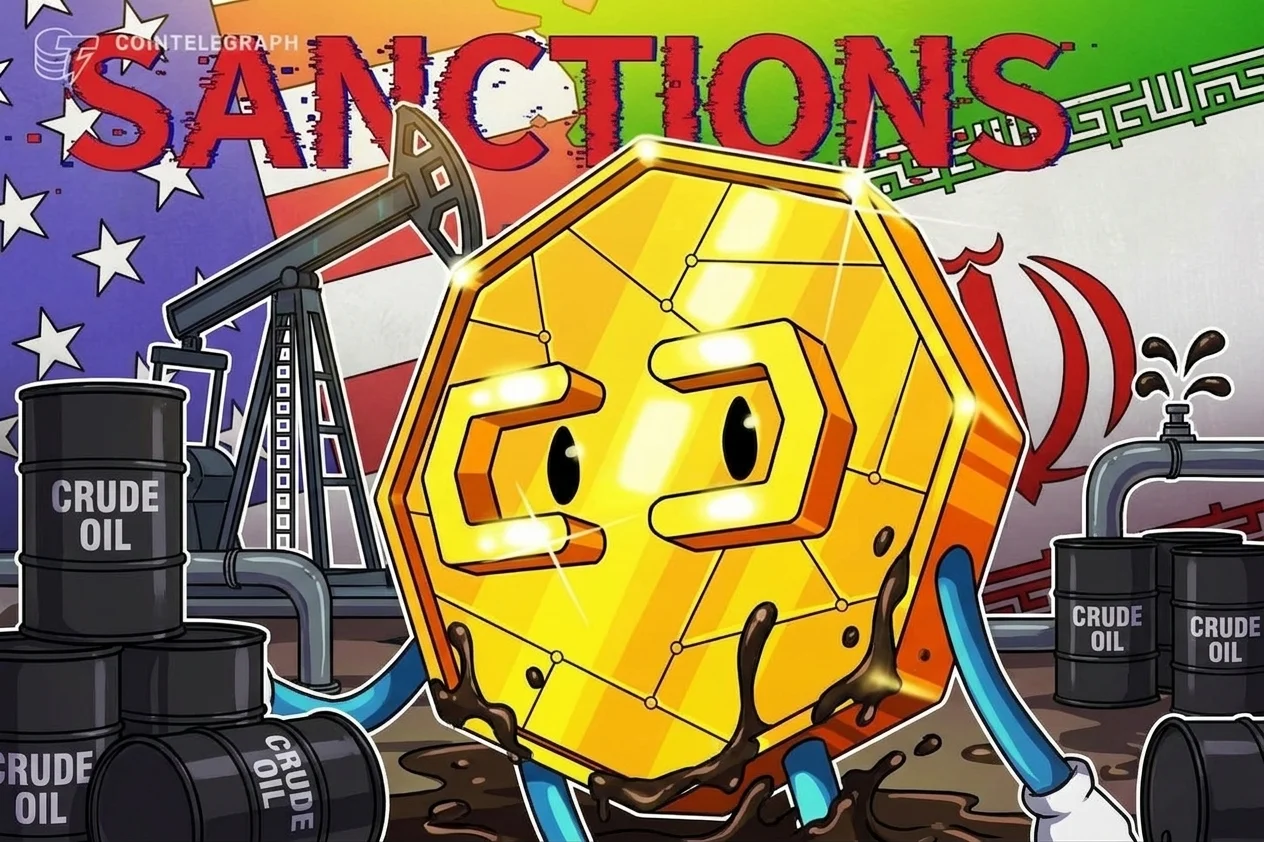
Expansion of United States Treasury Sanctions into Digital Asset Markets
Recent reporting published by Cointelegraph indicates that the United States Treasury Department has significantly broadened its enforcement strategy by issuing sectoral sanctions determinations that directly encompass digital assets, technology, gold, aviation, and shipping networks. This regulatory evolution marks a strategic shift from previous targeted enforcement actions against specific cryptocurrency exchanges toward a comprehensive framework designed to penalize any foreign individual or company operating within or providing services supporting Iran's broader digital asset ecosystem. According to the published information, the Office of Foreign Assets Control has been granted extended statutory authority to designate entities that facilitate transactions for Iranian state-backed actors, thereby increasing the regulatory burden on international market participants who handle digital currencies across multiple jurisdictions.
The administrative expansion follows a sequence of targeted enforcement measures executed by American authorities over the preceding months against various digital asset platforms and liquidity channels allegedly connected to Iranian interests. Industry analysts and compliance professionals have noted that these continuous policy adjustments demonstrate an aggressive posture by regulatory agencies toward blockchain-based financial networks that bypass traditional banking channels for cross-border settlements. Consequently, digital asset exchanges, payment processors, and custodial service providers operating outside the United States must navigate an increasingly complex environment where compliance failures regarding secondary sanctions can trigger immediate punitive measures from American financial regulators and enforcement divisions.
Allegations Concerning Oil-Linked Cryptocurrency Flows and Broker Networks
Publicly available documentation highlighted by Cointelegraph details specific allegations that a United Arab Emirates-based broker processed substantial cryptocurrency payments to facilitate international oil sales on behalf of Iranian military and government networks. The reports specify that Ukrainian-born broker Ivan Obukhov and his corporate entity, Foscom FZE, allegedly handled over one hundred million dollars in digital asset transactions since two thousand twenty-three to support the commercial activities of the Islamic Revolutionary Guard Corps and associated entities. These findings illustrate the intricate mechanisms through which decentralized digital assets are reportedly utilized by sanctioned states to maintain liquidity, settle international trade obligations, and circumvent traditional financial surveillance mechanisms.
The identification of specific intermediary brokers operating within major international commercial hubs underscores the vulnerabilities inherent in cross-border digital asset markets where oversight can be fragmented across different regulatory jurisdictions. Financial crime investigators have repeatedly emphasized that the integration of virtual currencies into energy-related trade routes presents severe challenges for conventional compliance frameworks, as digital tokens can be transferred rapidly across borders without touching traditional correspondent banking relationships. The unconfirmed allegations reported by media outlets emphasize the necessity for enhanced due diligence regarding over-the-counter trading desks and private brokerages that maintain commercial ties with entities operating in high-risk geopolitical zones.
Implications for International Exchanges and Global Compliance Protocols
The implementation of broad sectoral determinations creates profound compliance implications for centralized cryptocurrency exchanges and decentralized finance platforms operating on a global scale. Unlike previous regulatory actions that focused on specific designated wallets or localized platforms, the current framework empowers regulatory authorities to penalize any foreign financial institution that conducts or facilitates significant transactions on behalf of newly designated entities. This regulatory reach forces international exchanges to adopt uncompromising screening protocols, ensuring that their order books, liquidity pools, and customer onboarding procedures effectively screen out participants with indirect connections to sanctioned sectors.
Furthermore, industry compliance officers are being forced to re-evaluate their reliance on basic know-your-customer procedures, recognizing that sophisticated actors frequently employ obfuscation techniques, multi-hop transactions, and privacy-enhancing technologies to mask the true origin of funds. The reported enforcement actions demonstrate that regulatory bodies expect virtual asset service providers to maintain comprehensive visibility over their transaction graphs and to act swiftly upon receiving intelligence regarding illicit financial flows. Failure to adapt to these stringent compliance standards exposes global trading platforms to catastrophic regulatory penalties, including the potential revocation of operating licenses and total exclusion from Western banking partnerships.
Surveillance Challenges and the Evolution of Blockchain Investigation Techniques
Investigating illicit financial networks within the digital asset ecosystem requires sophisticated on-chain analytics capabilities, as illicit actors continually adapt their methodologies to evade detection by regulatory authorities and blockchain intelligence firms. The reliance on alternative digital assets, privacy coins, and stablecoins issued across multiple high-speed blockchains complicates the task of tracing funds from sanctioned energy sales to final conversion points. Law enforcement agencies and commercial analytics providers are forced to deploy advanced clustering algorithms and behavioral pattern analysis to uncover hidden links between ostensibly independent shell companies and state-backed procurement networks.
Despite these technological advancements, the opacity of certain peer-to-peer networks and decentralized exchange protocols continues to pose severe impediments to complete market transparency. The media reports concerning multi-million-dollar transfers highlight the reality that digital assets remain an attractive vector for circumventing traditional financial blockades, provided that willing intermediaries and brokers are available to facilitate off-ramp conversions. As regulatory bodies continue to refine their surveillance capabilities, the intersection between traditional international trade, illicit energy sales, and blockchain infrastructure will undoubtedly remain a primary focus of global financial enforcement for the foreseeable future.
Conclusion, Entity Attribution, and Mandatory Risk Remediation Actions
In conclusion, this Cexvia risk intelligence report establishes that the United States Treasury Department has officially implemented broader sectoral sanctions determinations targeting Iran's digital asset economy and associated oil-linked transaction channels, as reported by Cointelegraph. The affected entities explicitly named in these enforcement actions include the UAE-based broker Ivan Obukhov and his corporate enterprise Foscom FZE, while the directly impacted user group comprises international digital asset intermediaries, OTC brokers, and liquidity providers operating across high-risk corridors. It must be emphasized that these findings are based on media reporting and have not been officially confirmed by the targeted entities themselves.
The critical change resulting from this regulatory development is the immediate expansion of secondary sanction exposure for any foreign financial institution or crypto-exchange interacting with designated sectors. All affected market participants must immediately initiate a comprehensive audit of their counterparty relationships, upgrade their blockchain surveillance systems to detect indirect exposure to Iranian state networks, and enforce stringent compliance protocols to prevent regulatory penalties. Compliance officers are advised to continuously monitor official regulatory announcements and restrict transactional access for any entity exhibiting behavioral patterns linked to unverified intermediary brokers operating within the Middle Eastern region.
Cexvia conclusion
Regulatory Enforcement Assessment and Risk Mitigation Mandate
The concrete finding of this investigation is that the United States Treasury Department has implemented sectoral sanctions determinations covering digital assets and associated infrastructure, specifically targeting individuals and entities allegedly involved in Iranian oil-linked transactions. As reported by Cointelegraph, the affected entities include UAE-based broker Ivan Obukhov and his firm Foscom FZE, while the affected user group comprises international digital asset intermediaries, brokers, and liquidity providers interacting with high-risk jurisdictions. These measures establish a broader legal foundation for secondary sanctions against foreign institutions operating within Iran's digital asset economy. This report is based on media reporting and has not been officially confirmed by the targeted entities. This development is not officially confirmed.
- Risk meaning
- The broadening of United States regulatory measures introduces substantial compliance hazards for international cryptocurrency platforms, over-the-counter desks, and liquidity providers that maintain exposure to cross-border counterparties. Financial institutions and digital asset service providers face heightened obligations to screen transaction flows for indirect exposure to sanctioned networks, particularly regarding energy-related settlements involving Middle Eastern intermediaries. Failure to implement rigorous surveillance systems can lead to severe secondary penalties, loss of correspondent banking access, and potential asset freezes within Western financial jurisdictions.
- User action
- Digital asset participants and institutional market makers must immediately audit their compliance frameworks, enhance blockchain analytics protocols, and review all counterparty relationships linked to high-risk geographical regions. Compliance teams should deploy advanced chain surveillance tools to identify potential exposure to designated entities, brokers, and unverified OTC desks. Furthermore, management bodies must ensure that internal control mechanisms are fully equipped to restrict interactions with individuals or corporate entities operating within sectors designated under recent United States Treasury determinations.
Continue reading