Regulatory Risk Intelligence
US Senate Fails to Advance CLARITY Act Amid Stalled Legislative Proceedings
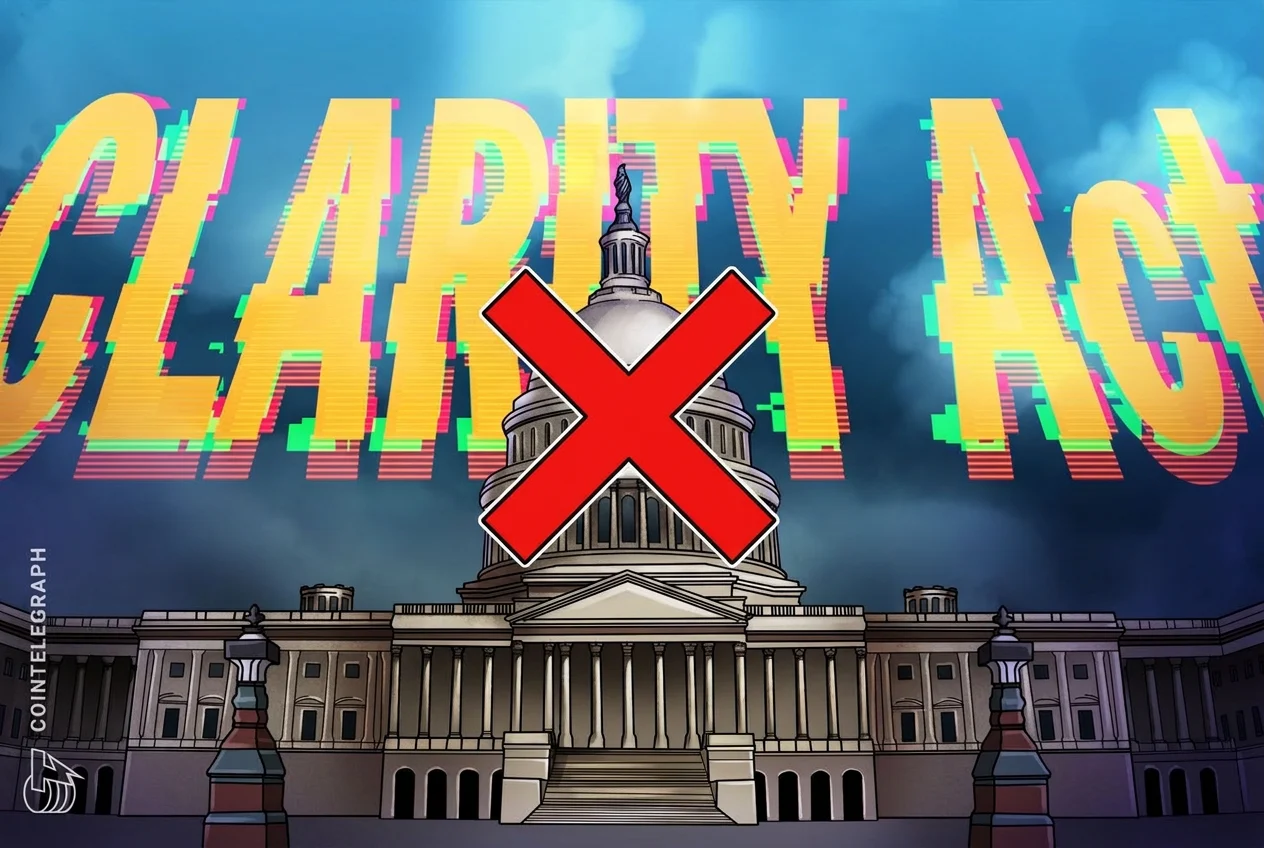
According to reporting by Cointelegraph, the United States Senate failed to pass a cloture motion on the Digital Asset Market Clarity Act, leaving federal digital asset oversight and related legislative initiatives facing an uncertain future. This legislative development is not officially confirmed by primary legislative transcripts and remains based on media coverage.
Legislative Proceedings and Senate Vote Breakdown
Recent reporting published by Cointelegraph outlined that the United States Senate did not secure sufficient support to advance the Digital Asset Market Clarity Act toward a formal floor debate. The legislative maneuver required sixty votes to limit debate and proceed with the proposed framework, but the final tally recorded forty-nine senators supporting the motion while fifty voted in opposition. This narrow failure highlights deep divisions within the legislative body concerning the appropriate structure and oversight mechanisms required for the domestic digital asset ecosystem.
The publication noted that the failed procedural vote transpired with fewer than thirty-six business days remaining before the commencement of a new congressional session following the upcoming midterm elections. Consequently, industry observers cited by the media outlet suggest that the legislative initiative will likely remain dormant for the remainder of the calendar year. This procedural roadblock leaves federal policy standards for cryptocurrencies without a unified statutory foundation, continuing the reliance on existing enforcement actions rather than dedicated congressional statutes.
Core Contentious Provisions and Ethics Debates
According to the Cointelegraph coverage, the legislation had previously encountered severe delays ahead of the congressional summer recess due to complex negotiations surrounding proposed ethics provisions. These contested clauses were designed to restrict government officials and their immediate family members from issuing, sponsoring, or otherwise profiting from digital assets while holding public office. Although reports indicated that executive leadership ultimately agreed to a revised bipartisan compromise aimed at tightening these specific anti-corruption restrictions ahead of the floor vote, new political obstacles materialized rapidly.
Specifically, the media source detailed that opposition arose from a coalition of eighteen state attorneys general who formally expressed apprehension regarding the potential consequences of the bill. These state-level officials argued that the legislative text as drafted would undermine the existing authority of individual states to investigate and prosecute cryptocurrency fraud, consumer protection violations, and related market misconduct. This unexpected coalition of state-level pushback introduced fresh complications that disrupted the fragile political coalition supporting the regulatory package before the crucial vote.
Regulatory Jurisdiction and Agency Oversight Division
The failure of the statutory framework leaves unresolved the long-standing jurisdictional friction between the principal United States financial regulators, namely the Commodity Futures Trading Commission and the Securities and Exchange Commission. Cointelegraph emphasized that market participants and legal analysts have long sought legislative clarity to definitively delineate which digital assets fall under the commodity classification versus securities oversight. Without a statutory boundary enacted by Congress, regulatory enforcement will continue to operate through a fragmented approach of administrative rulings and litigation.
Industry stakeholders have consistently warned that the ongoing regulatory ambiguity creates significant compliance challenges for institutional platforms, issuers, and broker-dealers operating within the jurisdiction. The absence of clear demarcation rules forces market participants to navigate overlapping regulatory mandates, increasing operational overhead and legal exposure. The Cointelegraph report underscores that the indefinite postponement of the legislative package preserves this challenging operational environment for cryptocurrency enterprises indefinitely.
Immediate Market Reactions and Price Movements
Following the announcement of the failed procedural vote in the Senate, digital asset markets registered immediate downward price adjustments across major cryptocurrency assets. Cointelegraph cited market data indicating that Bitcoin experienced a sharp decline, briefly dropping below the seventy-five thousand dollar threshold and recording losses exceeding five percent over the course of the trading session. This negative price action reflected broader disappointment among investors who had anticipated a legislative breakthrough to provide legal certainty for the sector.
The publication observed that the broader cryptocurrency ecosystem reacted sensitively to the legislative setback, as speculative capital and institutional investors reassessed their exposure following the stalled vote. Analysts referenced in the coverage noted that macroeconomic headwinds combined with the legislative uncertainty contributed to heightened volatility across digital asset exchanges and derivatives markets. Market participants were forced to quickly adapt risk parameters to account for the persistent lack of a federal regulatory framework.
Conclusion and Unconfirmed Regulatory Status
In conclusion, Cointelegraph reported that the United States Senate failed to advance the Digital Asset Market Clarity Act after a cloture motion received forty-nine votes in favor and fifty against. This reported development, which remains not officially confirmed by primary congressional records, directly affects digital asset market participants, institutional investors, and cryptocurrency exchanges operating under ongoing regulatory ambiguity. What has been reported is the procedural defeat of the bill and the subsequent market sell-off, while what remains unconfirmed is any prospective timeline for the reintroduction of the legislation in a future congressional session.
The affected entity in this legislative event is the United States Senate legislative process, while the impacted user group comprises global cryptocurrency investors and digital asset market participants. The immediate change following the vote is the preservation of jurisdictional uncertainty between federal regulatory agencies. The next required action for market participants is to maintain rigorous compliance monitoring across multiple state and federal frameworks while factoring ongoing legislative stagnation into their strategic risk management models.
Cexvia conclusion
Legislative Stagnation and Market Impact Assessment
Cointelegraph reported that the Senate vote reached 49 in favor and 50 against, falling short of the required threshold to progress the regulatory bill. This development, which is not officially confirmed by primary government records, impacts the broader cryptocurrency market and creates an ongoing absence of unified federal regulatory oversight for digital assets.
- Risk meaning
- The legislative setback prolongs regulatory ambiguity for digital asset participants, continuing the jurisdictional friction between federal financial oversight authorities.
- User action
- Market participants should monitor ongoing legislative discussions and prepare for continued regulatory fragmentation across different state and federal jurisdictions.
Continue reading