Regulatory Action
X Sues Bitcoin Account Operators Over Alleged $278K Payout Fraud
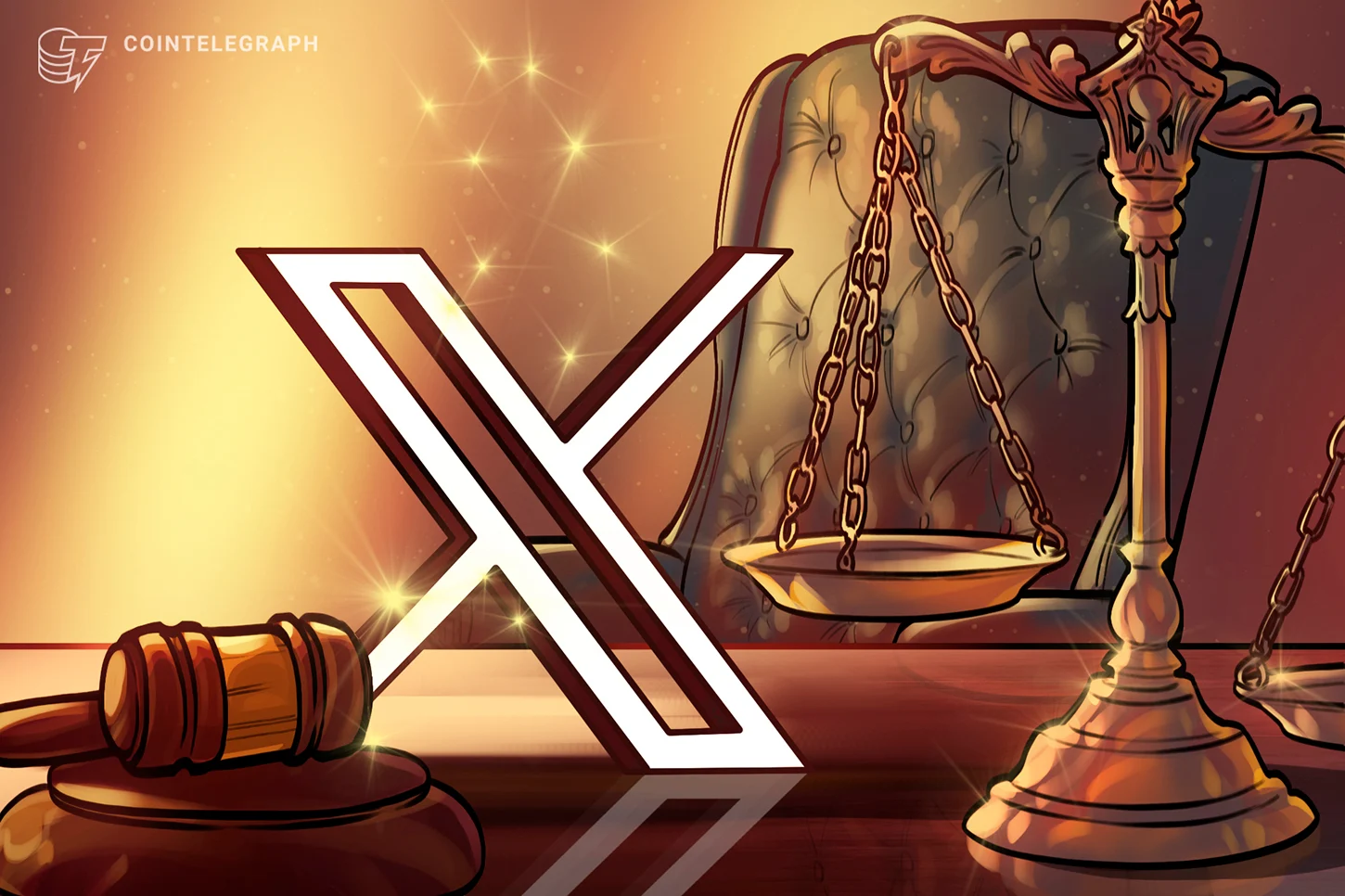
According to reporting by Cointelegraph, social media platform X has initiated legal proceedings against multiple Bitcoin-focused account operators in the High Court of England and Wales, alleging a coordinated scheme to manipulate engagement metrics and unlawfully collect creator revenue-sharing payouts. These allegations, which remain not officially confirmed by judicial rulings or the defense, involve estimated losses exceeding two hundred seventy-eight thousand dollars.
Overview of the Reported Legal Challenge
Recent investigative reporting published by Cointelegraph outlines a significant legal challenge initiated by social media giant X against specific individuals managing prominent Bitcoin-focused profiles. According to the publication, the lawsuit was formally submitted to the High Court of England and Wales, focusing on accusations that the defendants engineered artificial engagement metrics to siphon funds from the platform's established creator revenue-sharing program. The reported filing details how these networks allegedly bypassed traditional content performance standards to generate unearned financial returns from centralized advertising pools.
While these allegations suggest a sophisticated operation designed to exploit platform mechanics, industry observers must note that the claims originate entirely from the plaintiff's legal documentation and subsequent media coverage. As of the publication date, independent verification from judicial authorities or responses from the named defendants remain unavailable. Consequently, stakeholders across the digital asset ecosystem are advised to evaluate these developments cautiously while awaiting formal judicial proceedings or official statements from the involved parties.
Mechanics of the Alleged Engagement Manipulation
The reporting by Cointelegraph elaborates on the specific methods detailed in X's court filings, which describe how multiple interconnected profiles allegedly coordinated their publishing schedules to simulate organic community traction. The documentation cited by the publisher claims that the targeted accounts frequently published identical or highly similar commentary within seconds of each other, while secondary supporting accounts systematically amplified these posts through likes, replies, and reposts. This synchronized behavior allegedly created a deceptive impression of widespread public interest, thereby artificially inflating the creator payouts distributed to the operators.
Furthermore, the media coverage highlights that X ultimately retired the specific revenue-sharing program on September seventh and began deploying a successor framework known as Original Content Rewards on the following day. This structural shift by the platform occurs alongside proactive enforcement actions, including the administrative suspension of the implicated profiles prior to the formal initiation of court proceedings. Such operational changes illustrate how centralized platforms are continuously adapting their security and reward architectures to combat emerging exploitation vectors within creator economies.
Financial Scope and Defendant Identification
According to the Cointelegraph article, the lawsuit formally identifies several specific individuals and associated digital handles, linking specific Stripe payment accounts to the named defendants Vivek Kumar Sen and Zamyang Sherpa. The financial claims embedded in the court filings specify that the defendants allegedly obtained at least two hundred seven thousand three hundred eighty-four British pounds, equivalent to approximately two hundred seventy-eight thousand United States dollars, through the disputed revenue-sharing arrangement over an active period spanning from August 2023 through February 2026.
In addition to the direct payout recovery sought by the platform, the reporting notes that X anticipates incurring substantial administrative and investigative expenditures. Specifically, the company projects at least seventy-five thousand British pounds, roughly one hundred thousand dollars, in associated remediation and investigative costs. When combined with the primary payout claims, the aggregate financial exposure cited in the reported documents reaches at least two hundred eighty-two thousand three hundred eighty-four pounds before factoring in accumulating interest and external legal fees.
Broader Industry Implications for Crypto Media
The public disclosure of this lawsuit illuminates the precarious relationship between independent digital asset commentary accounts and the commercial monetization programs hosted by mainstream technology conglomerates. As crypto projects and influencers increasingly rely on platform-native monetization tools to sustain operations, aggressive regulatory and administrative crackdowns on perceived manipulation can introduce severe existential risks. This incident demonstrates that platform operators possess both the technical analytics and the legal willingness to pursue financial restitution across international jurisdictions when engagement practices violate internal terms of service.
Furthermore, industry analysts point out that the reliance on algorithmic engagement for revenue generation frequently incentivizes high-frequency posting and coordinated community amplification strategies. When platform policies shift or enforcement mechanisms tighten retroactively, accounts operating near compliance boundaries are exceptionally vulnerable to sudden demonetization and catastrophic audience loss. Consequently, professional digital asset reporting and community management teams are compelled to diversify their distribution channels to mitigate over-reliance on any single centralized social media environment.
Conclusion and Actionable Risk Findings
In conclusion, the Cointelegraph report details a significant legal challenge brought by X against Bitcoin account operators Vivek Kumar Sen and Zamyang Sherpa regarding alleged creator payout fraud exceeding two hundred seventy-eight thousand dollars. These material assertions remain not officially confirmed by independent judicial rulings or the defense teams representing the affected entities. The primary finding indicates that while the platform has taken decisive legal and administrative steps to recover funds and suspend involved accounts, the ultimate veracity of the coordination and fraud claims must be verified through formal legal adjudication in the High Court of England and Wales.
For affected user groups, including digital content creators, independent crypto media publishers, and community managers utilizing centralized platforms, the necessary change involves immediate auditing of engagement protocols and strict decoupling from automated amplification rings. The next action for risk-conscious operators is to diversify publishing infrastructure across decentralized networks while monitoring official court updates to ensure continuous compliance and protect organizational assets against unforeseen platform enforcement.
Cexvia conclusion
Conclusion and Strategic Outlook
Cointelegraph reported that X filed a lawsuit against individuals operating Bitcoin-focused accounts, claiming they extracted approximately two hundred seventy-eight thousand dollars through artificial engagement rings and coordinated posting strategies. This development highlights ongoing vulnerabilities within social media monetization frameworks, though the core claims remain not officially confirmed.
- Risk meaning
- The reported legal action underscores the expanding scrutiny facing crypto-related media operations and creator monetization programs across major Web2 platforms. When platforms alter reward structures or pursue aggressive litigation regarding engagement manipulation, participating accounts face immediate suspension risks and potential legal exposure, reinforcing the need for operational transparency and strict adherence to platform terms of service.
- User action
- Users and creators operating within crypto communities on centralized social media platforms should audit their engagement practices, avoid automated cross-posting rings, and ensure all revenue-sharing mechanisms are utilized strictly in accordance with published platform guidelines to mitigate sudden account termination or legal risks.
Continue reading