Market Risk & Regulation
XRP Sinks 10% as Clarity Act Fails in Senate and Bitcoin Slides Toward $76,000
According to reporting by CoinDesk, the United States Senate rejected a major cryptocurrency market structure bill through a procedural vote that fell short of the threshold, triggering a broad market decline across major digital assets and crypto-related equities. The legislative setback is not officially confirmed to be permanent for future sessions, yet it immediately impacted market valuations.
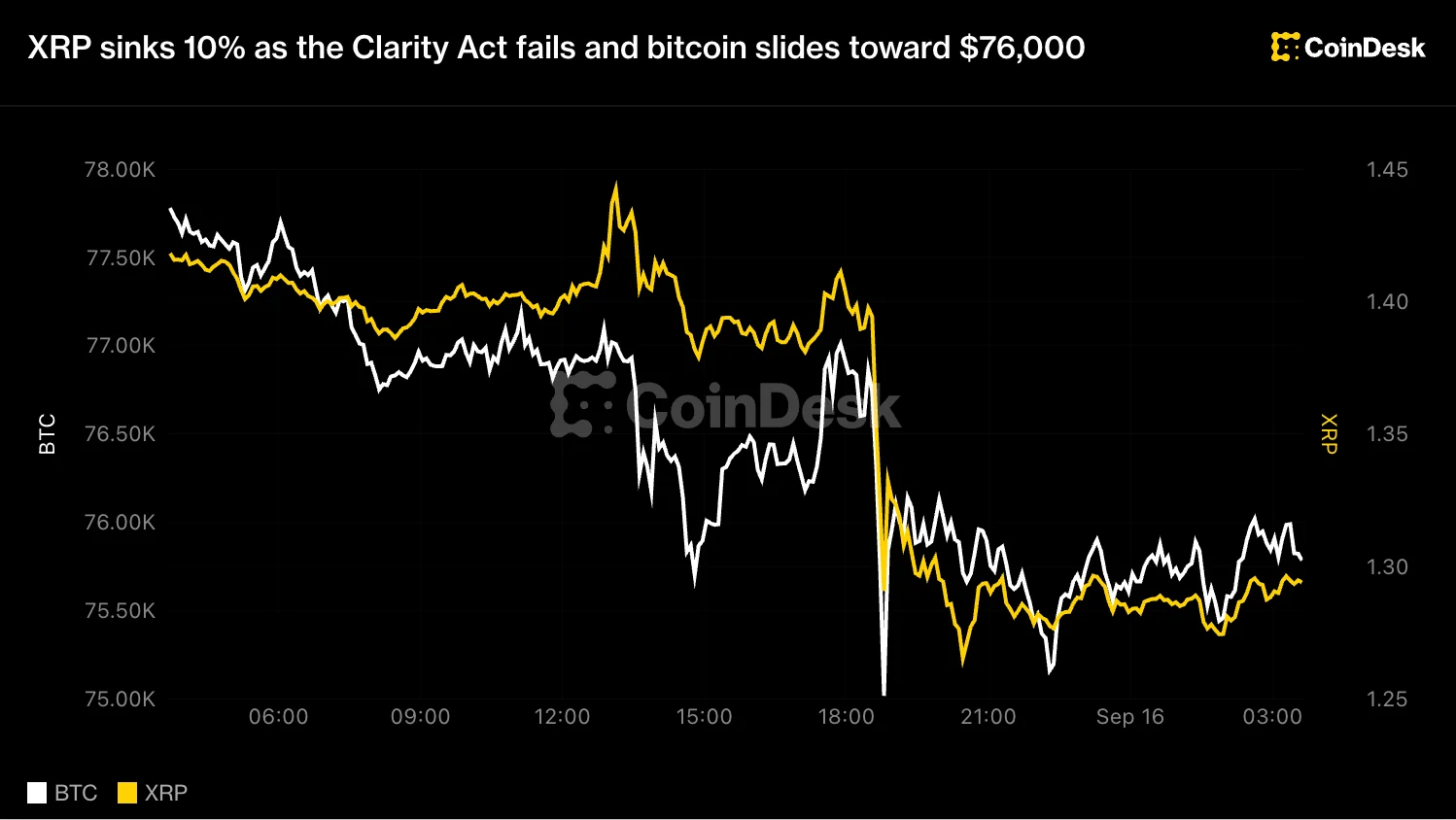
Senate Procedural Vote Derails Clarity Act Legislation
According to reporting published by CoinDesk, the United States Senate declined to advance a comprehensive cryptocurrency market structure bill during a crucial procedural vote. The legislative measure, widely known as the Clarity Act, secured forty-nine votes in favor against fifty votes opposed, failing to achieve the sixty votes necessary to move forward into formal floor debate. Negotiators had spent considerable time assembling an extensive compromise text spanning hundreds of pages, yet the final package ultimately encountered insurmountable political resistance from multiple lawmakers across the political spectrum.
The primary catalyst for the unexpected legislative defeat centered around disagreements concerning strict ethics safeguards, regulatory staffing allocations, and comprehensive provisions designed to combat money laundering and terrorist financing. Democratic Senator Elissa Slotkin publicly articulated her opposition to the measure, arguing that the proposed ethics provisions remained inadequate given the commercial activities involving digital assets by senior political figures. Additionally, concerns were raised regarding whether regulatory agencies possessed sufficient human resources and administrative staffing to effectively implement and oversee the sweeping new statutory mandates across the domestic financial sector.
Broad Cryptocurrency Market Liquidation and Token Declines
The abrupt failure of the legislative initiative triggered an immediate and severe sell-off across the digital asset ecosystem, impacting virtually every major cryptocurrency. CoinDesk data indicated that XRP suffered the most pronounced downward movement among leading digital assets, tumbling nearly ten percent to trade near one dollar and thirty cents during Asian morning hours. Other prominent tokens experienced substantial downward corrections as market participants rushed to de-risk their portfolios in response to the unexpected absence of federal statutory protection and regulatory clarity.
Ether recorded a significant loss of approximately five percent, pushing its market value down to roughly two thousand four hundred and ten dollars, while alternative layer-one assets such as Solana and Dogecoin mirrored similar percentage declines. Lesser-known tokens and decentralized finance assets also faced downward pressure as overall market sentiment deteriorated rapidly following the legislative collapse. Industry analysts noted that the sudden evaporation of legislative optimism eliminated a vital narrative driving speculative capital inflows into the digital asset sector.
Equities Suffer Steeper Losses Than Underlying Digital Assets
Crypto-related equities listed on public exchanges absorbed significantly heavier financial damage than the underlying digital tokens themselves as investors re-evaluated the operational outlook for listed fintech firms. Major industry players, including Coinbase and stablecoin issuer Circle, experienced share price contractions exceeding nine percent during the trading session. Other prominent market infrastructure providers, digital asset custodians, and mining enterprises also endured substantial capital outflows as equity investors factored in prolonged regulatory ambiguity.
The disparity in performance between equities and tokens highlighted the specific sensitivity of publicly traded companies to legislative outcomes that affect their core business models and compliance expenses. Entities such as Galaxy Digital, Gemini, and various Bitcoin mining operations registered sharp downward movements, reflecting broader market anxiety regarding the future operating environment for regulated crypto businesses in the United States. Observers pointed out that listed firms possess higher transparency and direct institutional exposure, making them immediate targets for risk-reduction strategies by professional portfolio managers.
Regulatory Agencies and Political Action Committees Face New Pressures
Following the legislative breakdown in the Senate, market attention has shifted directly back toward the regulatory authorities that the proposed legislation was intended to govern. The Securities and Exchange Commission continues to develop its internal regulatory frameworks and guidelines governing tokenized securities, leaving administrative rulemaking as the primary pathway for industry oversight. Without congressional intervention, market participants must rely entirely on administrative agency policies and enforcement actions to shape the boundaries of permissible activity.
Simultaneously, prominent political action committees within the digital asset sector, such as Fairshake, face critical strategic decisions regarding how to approach legislators who voted against the Clarity Act ahead of upcoming elections. Industry advocacy groups must evaluate whether to penalize or engage with politicians who contributed to the defeat of the statutory framework. Meanwhile, macroeconomic conditions add further complexity, as the Federal Reserve prepares to announce its impending interest rate decision amidst a fragile financial climate.
Conclusion and Affected Entity Assessment
CoinDesk reported that the rejection of the Clarity Act by the Senate left the broader cryptocurrency market without statutory certainty, causing widespread liquidations among retail holders of XRP and institutional investors in crypto equities. The precise long-term political trajectory of this specific legislative package remains unconfirmed, but the immediate consequence is a heightened regulatory burden overseen by existing administrative agencies. Affected entities encompass all retail market participants holding major tokens and publicly traded fintech companies facing restricted compliance visibility.
Market participants must acknowledge that while the reporting establishes the failure of the current Senate vote, any subsequent revival of the bill remains unconfirmed by official legislative schedules. Users and investors are advised to monitor official regulatory announcements from the Securities and Exchange Commission and manage leverage prudently to protect against ongoing macroeconomic and policy volatility.
Cexvia conclusion
Legislative Collapse and Immediate Market Assessment
CoinDesk reported that the Clarity Act failed to clear the Senate following a 49-50 procedural vote, which left the digital asset market without near-term statutory clarity. This legislative failure directly impacted market participants, including retail investors holding prominent tokens like XRP and institutional funds positioned in crypto-linked equities. The exact long-term legislative trajectory remains unconfirmed, requiring traders to monitor regulatory agency enforcement and upcoming macroeconomic interest rate announcements. This development is not officially confirmed.
- Risk meaning
- The sudden collapse of the legislative effort demonstrates the acute vulnerability of digital asset valuations to political and regulatory roadblocks in the United States. Without statutory frameworks defining jurisdiction between regulatory bodies, exchanges and market participants must navigate persistent uncertainty regarding compliance requirements and enforcement actions.
- User action
- Market participants holding major digital assets or crypto equities should evaluate their leveraged positions and risk exposure in light of heightened volatility. Traders must monitor forthcoming regulatory updates from financial agencies and adjust trading strategies to account for potential policy shifts.
Continue reading