Regulatory Action
CLARITY Act Stalls in United States Senate Amid Reported Ethics Stalemate and White House Silence
According to media reports published by LBank News and crypto.news, the CLARITY Act has stalled in the United States Senate because the White House has not officially responded to a bipartisan ethics counterproposal. Prediction market participants on Polymarket have adjusted their expectations, pricing the probability of the legislation becoming law this year down to 27 percent. Senate leadership has not filed cloture ahead of the legislative chamber recess, while analysts at Bernstein have warned that any sustained delay could provoke a knee-jerk sell-off across digital asset markets. These claims are not officially confirmed.
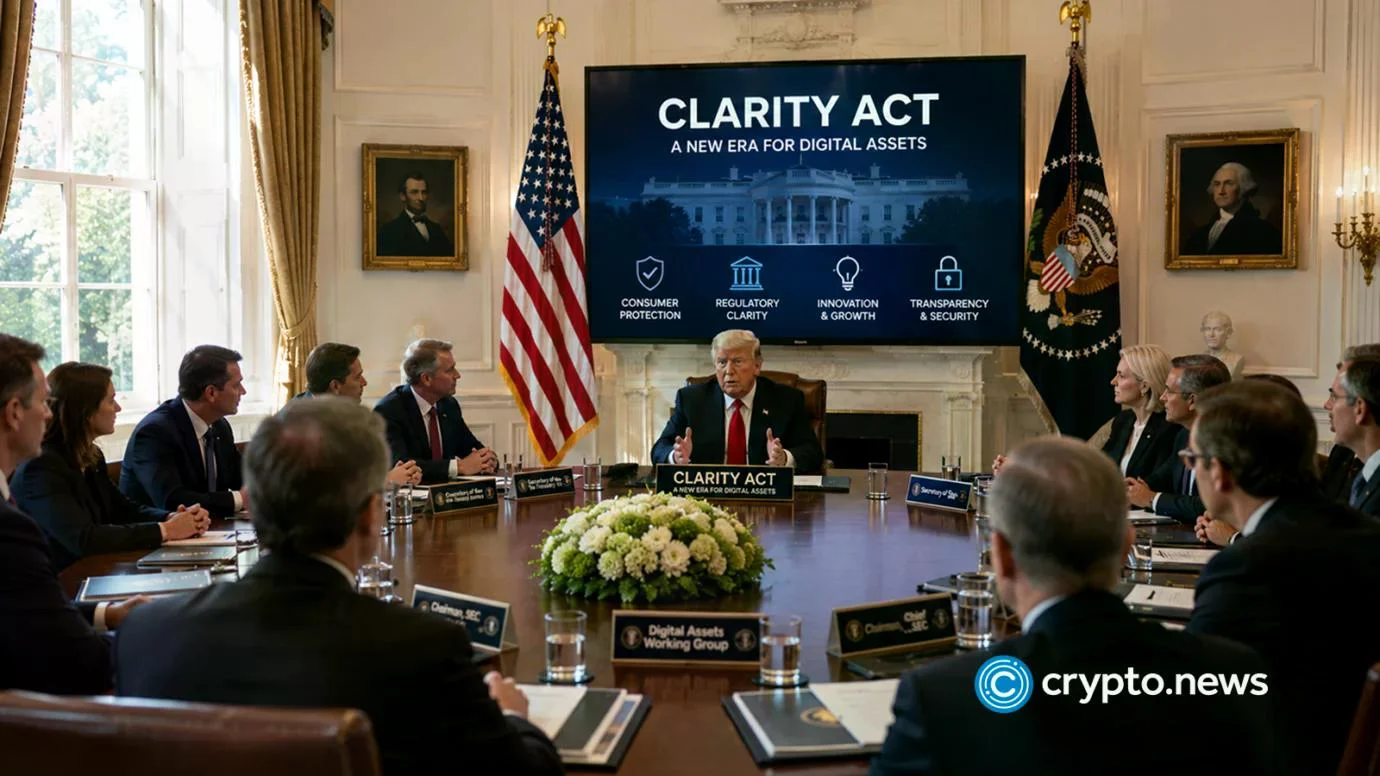
Overview of Legislative Impasse and Ethics Dispute
Recent reporting published by LBank News and sourced from crypto.news highlights that the CLARITY Act has encountered significant procedural roadblocks in the United States Senate. The primary friction point centers on unresolved ethics provisions governing the conduct of federal officials and digital asset transactions. According to journalist Eleanor Terrett, Republican Senator Thom Tillis and Democratic Senator Ruben Gallego submitted a bipartisan counterproposal intended to break a prior deadlock by granting state attorneys general enforcement authority. This compromise was designed to address Democratic objections that previously limited enforcement strictly to the Department of Justice, thereby threatening the bill's viability.
Despite these legislative negotiations, the White House has reportedly failed to issue a formal response to the Tillis-Gallego compromise. This silence has stalled the consensus-building process necessary to secure the vital sixty votes required to overcome a potential filibuster in the Senate chamber. While the debate involves complex constitutional and statutory ethics boundaries, the immediate operational consequence is a complete halt in floor momentum. Industry stakeholders and legislative observers are left waiting for an official executive signal that could either revive the bipartisan agreement or force lawmakers back to the drafting table before the congressional schedule becomes entirely consumed by midterm election priorities.
Senate Calendar Pressures and Procedural Hurdles
Time constraints are increasingly compounding the legislative difficulties facing the digital asset market structure proposal. Senate Majority Leader John Thune has not filed a cloture motion for the legislation, meaning lawmakers lack the required procedural runway to advance the measure before the scheduled congressional recess. The published Senate schedule for the relevant weekly session prioritized a cloture vote on a motion to proceed to a separate legislative vehicle for a continuing resolution, omitting any scheduled consideration of the digital asset measure. Even if leadership were to file cloture expeditiously, chamber rules mandate specific maturation periods before an initial vote can legally occur.
Beyond the procedural calendar and the ethics impasse, the bill faces substantive resistance from various law enforcement organizations and prosecutors. These entities have expressed serious concerns regarding provisions designed to protect specific non-custodial blockchain developers from mandatory registration requirements under the Bank Secrecy Act. Treasury Secretary Scott Bessent has publicly defended the text, asserting that non-custodial developers have historically operated outside those obligations and that the statutory language merely codifies existing Treasury policies. Nevertheless, these competing stakeholder demands continue to complicate the legislative pathway and strain the coalition required for successful passage.
Prediction Market Shifts and Declining Passage Odds
Participant sentiment within decentralized prediction markets has adjusted significantly in response to the reported legislative delays. According to trading data from Polymarket, participants currently assign a low 27 percent probability that the legislation will successfully pass both chambers of Congress and be signed into law before the conclusion of the year. This valuation represents a steep decline from earlier in the year when market expectations exceeded 80 percent following initial committee momentum. The downward re-pricing reflects mounting skepticism regarding the feasibility of resolving complex ethics and decentralized finance disagreements within the shrinking congressional calendar.
The contraction in market-implied passage odds highlights the vulnerability of crypto-asset valuations to macroeconomic and legislative sentiment shifts. While the revised probability does not formally signify a permanent defeat for the bill, it underscores the reality that structural regulatory reform remains elusive in the near term. Industry analysts note that ongoing negotiations could potentially resume during or after the legislative recess, but each passing week increases the likelihood that upcoming midterm election campaigning will completely eclipse policy debates until a new congressional session convenes.
Analyst Warnings on Potential Market Sell-Offs
Financial institutions and market intelligence providers have begun issuing cautionary notes regarding the potential repercussions of a failed legislative push. Analysts at Bernstein warned their client base that a formal Senate failure to advance the market structure bill could precipitate an immediate and sharp decline in Bitcoin and broader digital asset valuations. They characterized the anticipated market response as a knee-jerk reaction capable of driving token prices through another leg lower as speculative premium is rapidly unwound from spot portfolios.
Despite the near-term downside risks associated with legislative stagnation, Bernstein's strategic outlook maintains that the broader crypto market could find a definitive tactical bottom and regain positive momentum toward the latter part of the third quarter and the early fourth quarter. Furthermore, the analysts suggest that a failure in Congress would likely increase pressure on federal financial regulators such as the Securities and Exchange Commission and the Commodity Futures Trading Commission to expand guidance through alternative initiatives like Project Crypto, offering temporary administrative relief despite lacking permanent statutory authority.
Ecosystem Implications and Regulatory Guidance Alternatives
The potential absence of comprehensive statutory reform leaves digital asset entities reliant on administrative enforcement actions and agency-specific policy statements. Regulatory agencies have continuously expanded their oversight frameworks independently, creating an environment where compliance requirements are interpreted through litigation and administrative guidance rather than clear congressional mandates. For centralized and decentralized exchanges, market makers, and institutional custodians, this regulatory ambiguity increases operational costs and restricts the rollout of innovative tokenomic structures within domestic United States markets.
Should the legislative framework fail to advance before the conclusion of the current congressional session, federal regulators may introduce targeted administrative rules to address specific industry pressures. Such administrative measures could encompass updated token classification rubrics, expanded clarity for decentralized finance participants, and potential safe harbors for qualifying token issuances. However, legal experts emphasize that administrative guidance lacks the durability of statutory law and remains highly susceptible to judicial challenges or reversals by future executive administrations, underscoring the enduring need for comprehensive congressional action.
Conclusion and Mandatory Action Plan
In conclusion, media reports published by LBank News and crypto.news indicate that the CLARITY Act has stalled in the United States Senate due to an unresolved ethics dispute and White House silence on the Tillis-Gallego counterproposal. Polymarket prediction data shows passage odds falling to 27 percent, while Senate leadership has withheld cloture filings ahead of the upcoming legislative recess. Bernstein analysts warn that further delays risk provoking a knee-jerk crypto sell-off, though a tactical market bottom could form later in the year. Importantly, these claims are not officially confirmed by the White House or Senate leadership, and market participants must distinguish between reported procedural impasses and verified legislative outcomes.
The affected entity is the United States Senate legislative apparatus, and the affected user group comprises digital asset market participants, institutional investors, and exchange compliance officers. The required change is an immediate pivot toward monitoring administrative guidance rather than anticipating immediate statutory reform. The next required action is for compliance and risk management teams to review existing operational exposures under current agency guidelines while refraining from structural modifications based on unconfirmed legislative timelines.
Cexvia conclusion
Assessment of Legislative Stalled Status and Market Impacts
The independent risk intelligence newsroom Cexvia has evaluated the media reports concerning the legislative stalemate surrounding the CLARITY Act in the United States Senate, affecting digital asset market participants, institutional investors, and compliance officers. Based on reporting from LBank News and crypto.news, the White House has not officially confirmed any response to the Tillis-Gallego ethics counterproposal, and Senate leadership has declined to file cloture before the upcoming recess. The affected user group comprises crypto exchange traders, compliance personnel, and retail investors who face heightened policy uncertainty. The required change is an increased focus on alternative regulatory pathways, while the immediate next action is monitoring official congressional proceedings and executive branch statements.
- Risk meaning
- The suspension of legislative momentum for a comprehensive market structure bill introduces substantial regulatory ambiguity for United States digital asset operations. Without clear statutory demarcations between the Securities and Exchange Commission and the Commodity Futures Trading Commission, trading platforms and token issuers must continue navigating a fragmented enforcement environment. Furthermore, the reliance on interim administrative guidance rather than permanent legislation leaves compliance frameworks vulnerable to political shifts and judicial challenges. Market participants must account for potential volatility driven by sudden sentiment reversals when expected regulatory milestones are missed.
- User action
- Market participants, token issuers, and compliance professionals operating within United States jurisdictions should review their regulatory risk exposure and contingency plans. Compliance teams must prepare for continued oversight under existing agency guidelines, including potential Project Crypto initiatives from federal regulators. Traders and investors should maintain robust risk management protocols to mitigate potential portfolio drawdowns resulting from macro-regulatory headline sensitivity. Entities should refrain from altering long-term infrastructure deployments until official legislative texts achieve formal enactment.
Continue reading