Regulatory Developments
Trump Advocates for 'Fair' CLARITY Act Amid Senate Voting Challenges
President Donald Trump urged Congress to pass a 'fair' version of the CLARITY Act as the crypto market structure bill faces a 60-vote threshold in the Senate. The legislation aims to clarify digital asset oversight between the SEC and CFTC but remains stalled over disputes on decentralized finance, stablecoin rewards, and ethics rules. crypto.news reported the developments without official confirmation. This development is not officially confirmed.
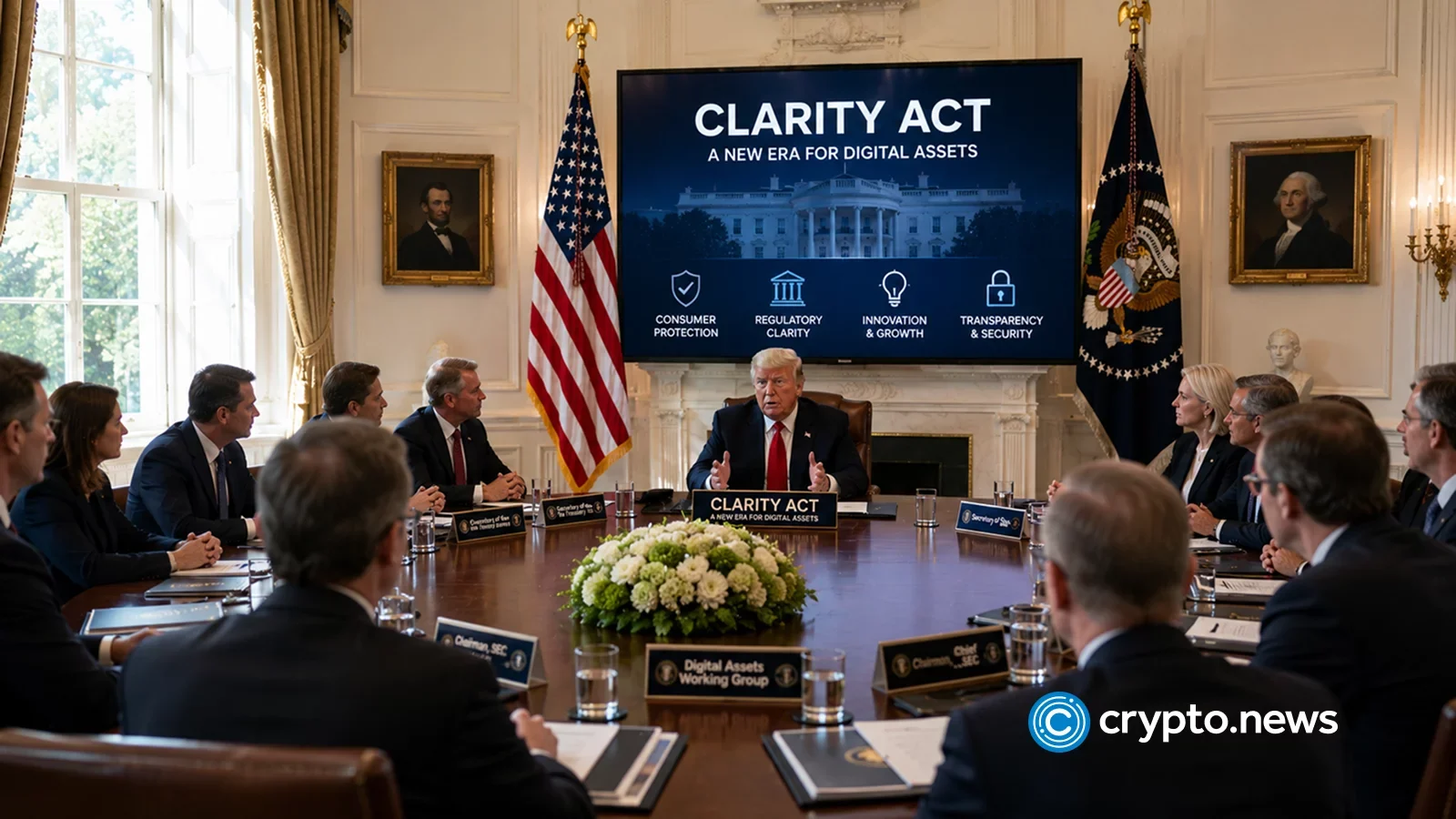
Trump's Call for CLARITY Act Legislation
President Donald Trump emphasized the need for the CLARITY Act during an August 19 White House event, framing it as critical for maintaining U.S. leadership in digital asset innovation. The legislation, which aims to establish clear regulatory boundaries between the SEC and CFTC, has stalled in the Senate due to unresolved disputes over decentralized finance (DeFi) frameworks and stablecoin reward mechanisms. Trump's remarks followed discussions with executives from major crypto firms, including Coinbase and Ripple, who highlighted the bill's potential to institutionalize current regulatory policies. However, the absence of a finalized Senate vote underscores the challenges in achieving bipartisan consensus on key provisions.
The CLARITY Act's core objective is to create a structured regulatory environment for digital assets by defining legal categories and assigning oversight responsibilities. While the House passed its version in July 2025, Senate negotiations remain deadlocked over ethics rules for government officials with crypto interests. These provisions, which could restrict holdings or business activities of senior officials, have become a contentious point in the debate. Trump's advocacy for a 'fair' version of the bill reflects ongoing efforts to balance regulatory clarity with political considerations, though the lack of a confirmed timeline raises concerns about legislative progress.
Senate Negotiations and Legislative Hurdles
Senate Majority Leader John Thune's cloture motion set the stage for a 60-vote procedural test, but negotiations remain deadlocked over critical provisions. Disagreements on DeFi treatment, stablecoin rewards, and ethics rules have reduced the bill's passage probability to below 20% as of mid-August, according to crypto.news analysis. The unresolved issues include whether decentralized protocols should be exempt from certain regulations and how to structure stablecoin reward systems without stifling innovation. These debates highlight the difficulty of reconciling diverse stakeholder interests within the legislative framework.
The CLARITY Act's fate hinges on bipartisan cooperation, but the narrow Senate majority complicates this effort. With Republicans holding 53 seats and Democrats controlling the remaining 47, achieving the 60-vote threshold requires Democratic support. However, Democratic negotiators have pushed for stricter ethics rules, which could impact Trump's personal crypto interests and those of other officials. The limited September legislative window before the November elections further complicates the timeline, as lawmakers prioritize campaign activities over regulatory debates.
SEC and CFTC Regulatory Frameworks
The SEC's Regulation Crypto Assets proposal complements the CLARITY Act by offering fundraising exemptions for qualifying crypto investment contracts. However, the agency's authority is constrained by existing congressional mandates, preventing it from unilaterally redefining the SEC-CFTC oversight boundary. SEC Chairman Paul Atkins emphasized that the agency's work supports legislative efforts rather than replacing them, stating, 'The most important priority is for Congress to send the Clarity Act to your desk for your signature.' This highlights the interdependence between regulatory agency actions and legislative processes in shaping crypto policy.
The CFTC's upcoming Innovation Advisory Committee meeting will address digital assets, AI, and prediction markets, though it lacks authority to adopt regulations. The panel's discussions will influence future oversight strategies but cannot directly impact the CLARITY Act's passage. Meanwhile, the Treasury Department's implementation of the GENIUS Act continues, focusing on stablecoin authorization requirements and compliance standards. These parallel regulatory efforts underscore the complexity of U.S. crypto governance, with multiple agencies and legislative bodies playing distinct roles.
Market Implications and Industry Responses
The CLARITY Act's stalled progress has created uncertainty for crypto firms, particularly those reliant on stablecoin ecosystems. Coinbase CEO Brian Armstrong emphasized that passing the bill would institutionalize current regulatory policies, ensuring long-term stability. However, unresolved disputes over stablecoin rewards and DeFi governance models raise concerns about potential compliance costs. The lack of a clear regulatory framework may also deter institutional investment, as firms await legislative clarity before committing capital.
Industry stakeholders have called for expedited negotiations to resolve key provisions, with some advocating for a compromise on ethics rules. Ripple and other companies have lobbied for balanced regulations that protect innovation while addressing oversight gaps. The CFTC's advisory meeting provides a platform for industry input, but its non-binding nature limits its impact on the CLARITY Act's final language. As the Senate approaches the 60-vote threshold, market participants remain cautious, awaiting concrete legislative developments.
Next Steps and Regulatory Outlook
The CLARITY Act's future depends on Senate negotiations and the outcome of the 60-vote procedural test. With lawmakers returning from recess, the focus will shift to resolving disputes over ethics rules and DeFi frameworks. The SEC and CFTC's ongoing rulemaking efforts will also shape the regulatory landscape, though their authority remains constrained by congressional mandates. Market participants must monitor both legislative and agency developments to assess potential impacts on compliance strategies and investment decisions.
The lack of official confirmation regarding the CLARITY Act's passage underscores the need for caution among stakeholders. While Trump's advocacy highlights political momentum, the absence of a finalized bill leaves regulatory uncertainty intact. The next critical milestone is the Senate's ability to secure the required votes, with implications for the broader crypto industry. As the November elections approach, the legislative calendar will remain tight, increasing the risk of further delays in regulatory clarity.
Cexvia conclusion
Regulatory Uncertainty Persists for CLARITY Act
The CLARITY Act's passage remains unconfirmed, with Senate negotiations unresolved. Crypto firms and investors face regulatory uncertainty. Next steps include monitoring Senate voting dynamics and regulatory agency actions. This development is not officially confirmed.
- Risk meaning
- The CLARITY Act's stalled progress highlights regulatory fragmentation in crypto governance. Uncertainty may delay market innovation and compliance frameworks.
- User action
- Stakeholders should track Senate voting updates and agency rulemaking timelines. Legal teams should assess potential impacts on compliance strategies.
Continue reading